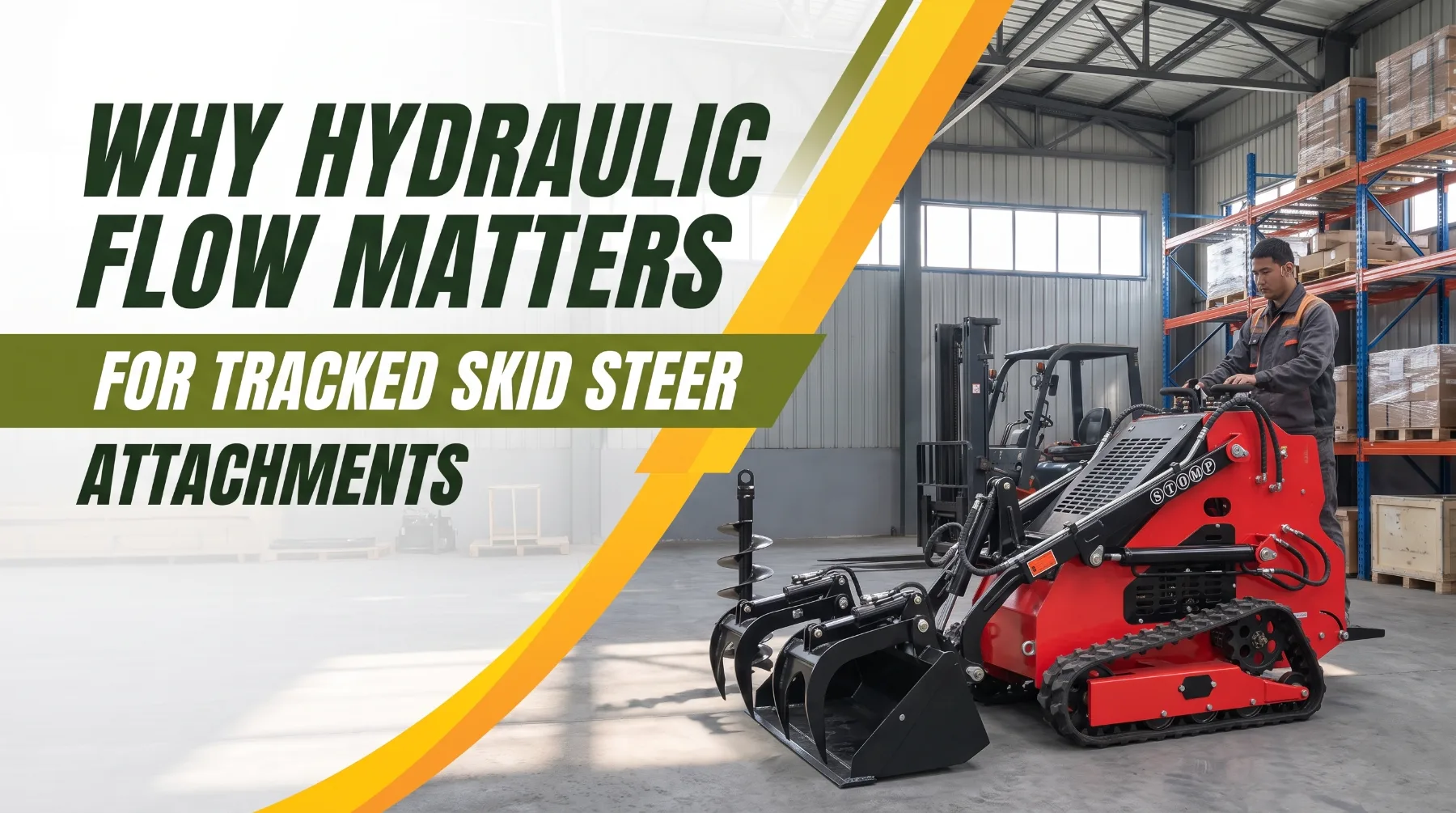
A tracked skid steer is only as capable as the attachment on its coupler, and that attachment is only as capable as the hydraulic flow feeding it. Buyers often shop by horsepower, rated operating capacity, or track width, then bolt on a mulcher or cold planer and wonder why it bogs down, overheats, or barely turns. The machine isn't broken. The hydraulic flow simply doesn't match what the attachment was built to consume.
Hydraulic flow is the single specification that determines whether an attachment performs at its rated potential or struggles through every pass. It governs how fast an auger spins, how aggressively a mulcher chews through brush, and how hard a hammer strikes. Get the pairing right, and the attachment delivers the productivity it promises. Get it wrong, and you lose output, waste fuel, and risk expensive damage. This post explains what hydraulic flow is, why it drives attachment performance, how different tools demand different flow rates, what happens when flow is mismatched, and how to match your machine to the work with confidence.
What Hydraulic Flow Actually Means
Hydraulic flow is the volume of hydraulic fluid the skid steer's pump delivers to the auxiliary circuit over time, measured in gallons per minute (GPM). That fluid is the working medium that transfers engine power to the attachment. When you engage a hydraulic tool, the pump pushes oil through the couplers and into the attachment's motor or cylinder, and the rate of that delivery sets how fast and how forcefully the attachment can work.
Flow works hand in hand with pressure, measured in pounds per square inch (PSI). If flow is the volume of oil moving, pressure is the force behind it. Flow generally dictates speed, how fast a motor spins or a cylinder cycles, while pressure dictates force, how much resistance the attachment can push through. An attachment needs both in the right proportion, but flow is the specification most often mismatched, because it varies widely between machines and tools.
Multiply flow and pressure together and you get hydraulic horsepower, the real measure of the power reaching the attachment. This is the crucial point buyers miss: engine horsepower keeps the machine running, but hydraulic horsepower does the attachment's work. A tracked skid steer with a strong engine but a modest auxiliary flow rate simply cannot deliver full power to a flow-hungry tool, no matter how impressive the spec sheet looks.
Why Flow Is the Critical Specification for Attachments
Every hydraulic attachment is engineered around a specific flow range. The manufacturer designs the motor displacement, the cutting drum speed, or the strike frequency assuming a certain volume of oil arrives per minute. Supply that volume, and the attachment operates exactly as intended. Fall short, and it works at a fraction of its capability, because the motor never reaches its designed operating speed.
Consider a mulching head as the clearest example. Its rotor needs to spin fast enough to carry the cutting teeth through wood with momentum. That rotor speed comes directly from the flow feeding its motor. Starve the motor of flow, and the rotor slows, the teeth lose their cutting energy, and the head stalls the moment it meets a heavy branch. The attachment isn't underbuilt; it's underfed.
This is why flow, not engine size, is the honest predictor of attachment performance on a tracked skid steer. Two machines with identical engines can deliver very different results at the coupler if their auxiliary hydraulic systems differ. The machine that supplies the flow the attachment was designed for will out-produce the one that doesn't, every single pass. When you match flow to the tool, you unlock the productivity you paid for.
How Different Attachments Demand Different Flow Rates
Hydraulic attachments fall into broad categories based on how much flow they consume, and understanding these tiers is the foundation of a sound match. Each tool converts flow into work differently, so the right flow rate depends entirely on what the attachment does.
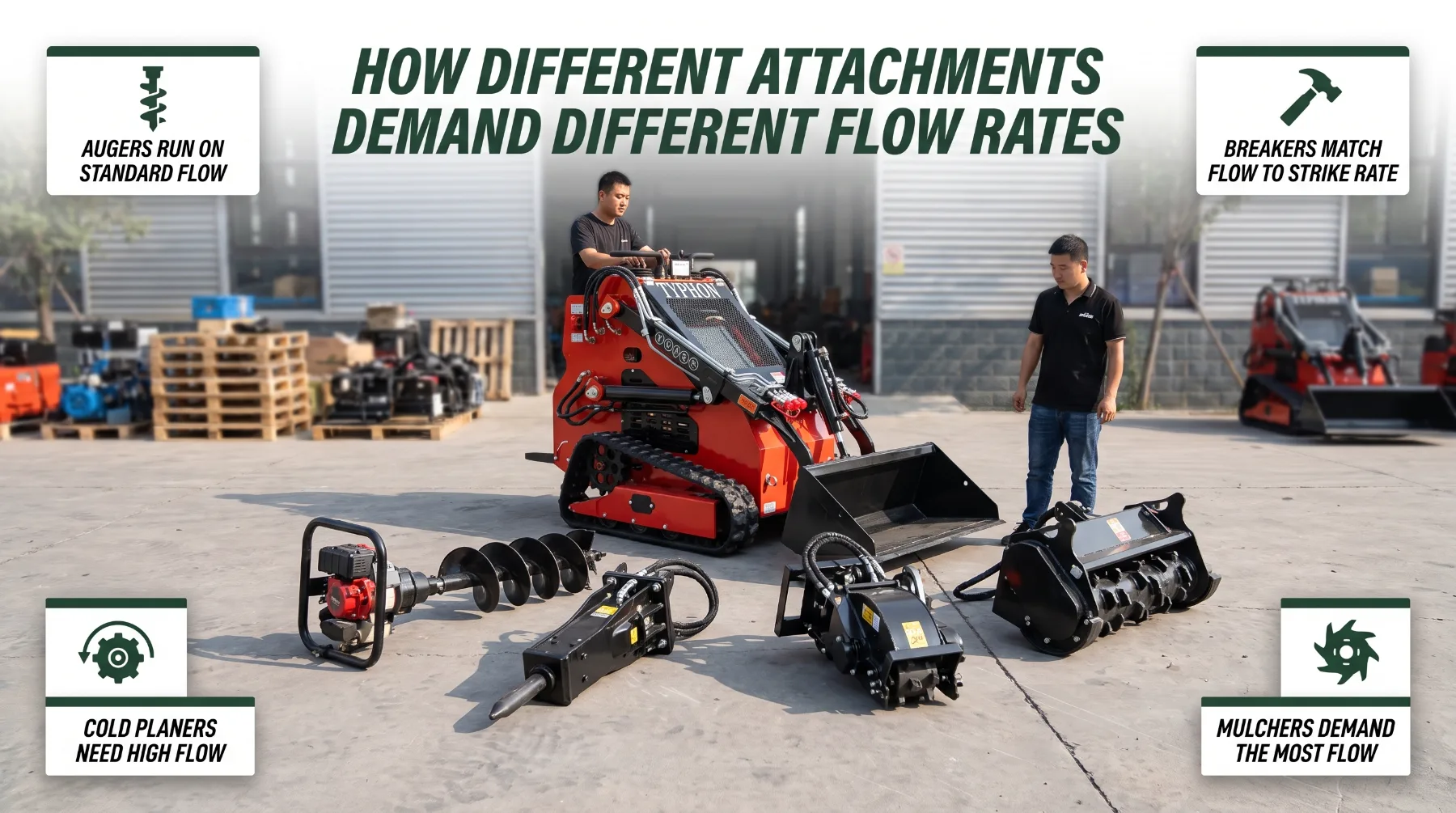
- Augers. Augers are relatively modest consumers, typically running well within standard-flow ranges. Flow sets the bit's rotational speed while pressure handles the resistance of dense soil. Because augers turn slowly and rely more on torque than speed, they rarely demand high flow to perform.
- Hydraulic hammers (breakers). Hammers convert flow into strike frequency and energy. Many operate comfortably on standard flow, since excessive flow can drive the hammer faster than its design allows. Matching flow to the manufacturer's window keeps the strike rate correct and protects the tool.
- Cold planers. Planers grind asphalt and concrete with a rotating drum of carbide teeth, and that drum needs substantial flow to hold cutting speed under load. Most cold planers demand high flow to maintain depth and pace without bogging in the cut.
- Mulchers and brush cutters. Mulching heads are among the hungriest attachments on the market. Their rotors store energy as rotational momentum, and only high flow keeps that rotor spinning fast enough to shred dense material continuously. These tools almost always require a high-flow system to reach their rated output.
The pattern is straightforward: tools that rely on sustained high-speed rotation under heavy load, mulchers and cold planers chief among them, demand high flow, while torque-driven or impact tools like augers and hammers often work well on standard flow. Always confirm the specific attachment's rated flow window before pairing it, because ranges vary by model and manufacturer.
What Happens When Hydraulic Flow Is Mismatched
A flow mismatch runs in two directions, and both carry real costs. Understanding each failure mode helps you spot trouble before it damages equipment or drags down a job.
When flow is too low, the attachment is starved. The motor can't reach its designed speed, so a mulcher rotor spins sluggishly, a cold planer drum bogs in the cut, and productivity collapses. The operator compensates by slowing down, taking shallower passes, and working the machine harder for less output. Worse, an under-fed system often runs hotter as the attachment labors, and chronic heat degrades hydraulic fluid, wears seals, and shortens the life of both the tool and the machine's hydraulic components. Low flow doesn't just slow the work; it quietly damages the system over time.
When the flow is too high, the danger is different but no less serious. Feeding an attachment more oil than it's rated for can over-speed its motor, spike internal pressure, and overwhelm seals and bearings that were never designed for that volume. A hydraulic hammer driven beyond its strike frequency can suffer accelerated wear or outright failure. Excess flow also generates heat as the system forces oil through passages sized for less, and that heat carries the same consequences as an overworked low-flow setup. Pushing an attachment past its rated flow voids warranties and invites sudden, costly breakdowns.
The lesson is the same in both directions: an attachment performs safely and productively only within its designed flow window. Too little starves it, too much stresses it, and neither extreme delivers the output or the service life you're paying for.
Standard-Flow vs. High-Flow Systems
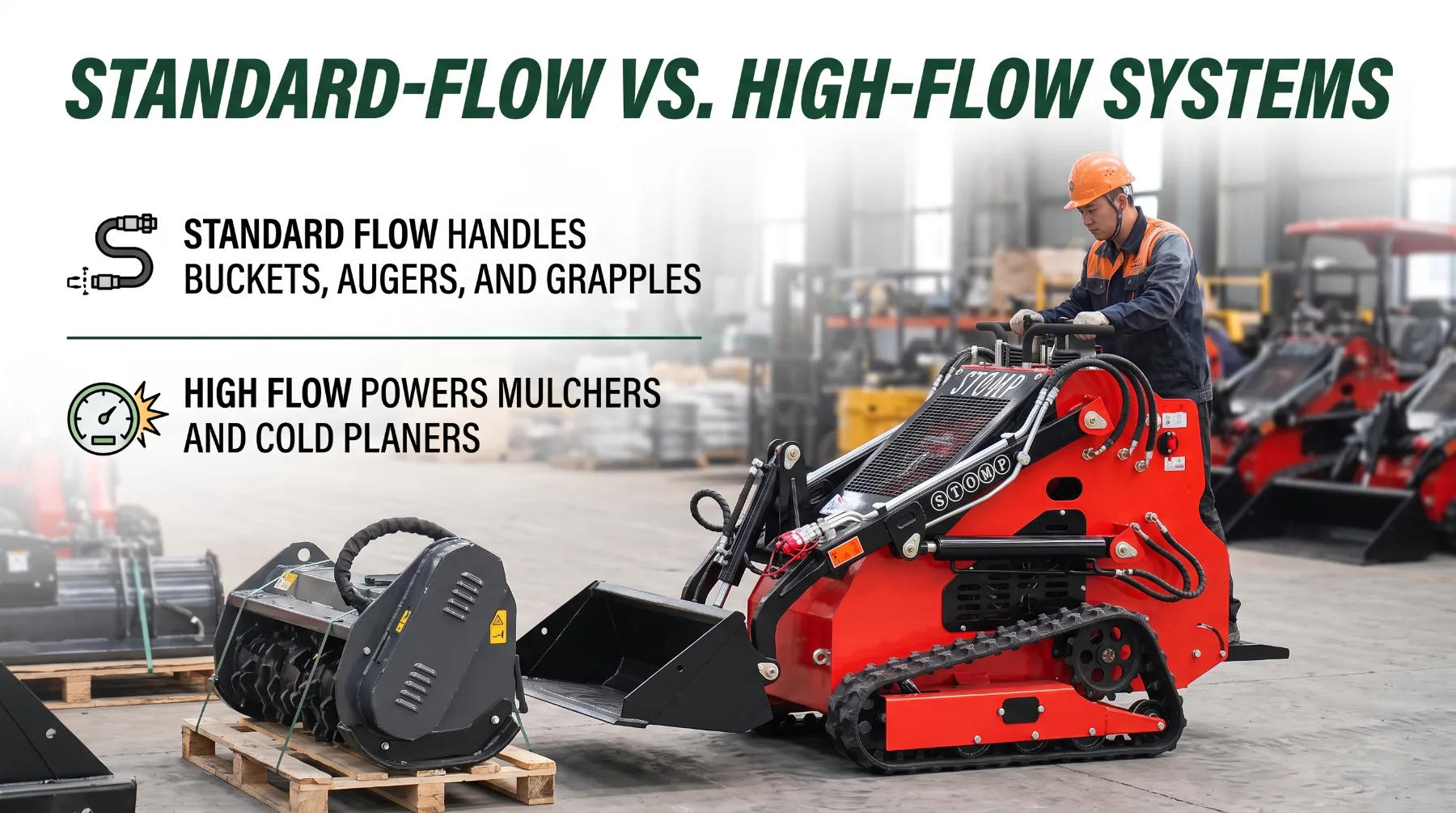
Tracked skid steers are generally offered in two auxiliary hydraulic configurations, and knowing the difference is essential when you match a machine to your work. The distinction comes down to how much flow the auxiliary circuit can deliver.
Standard-flow systems typically supply flow in the range most everyday attachments require, and they handle augers, buckets, grapples, hydraulic hammers, and lighter tools with ease. For operators whose work centers on material handling, digging, and general tasks, standard flow is entirely sufficient and often the more economical choice. There's no advantage in paying for capacity you'll never use.
High-flow systems deliver a substantially greater volume of oil to the auxiliary circuit, unlocking the demanding attachments that standard flow can't properly run. Mulchers, large cold planers, snow blowers, and other high-consumption tools need this extra flow to reach their rated performance. A tracked skid steer configured for high flow is built to feed these hungry attachments continuously, which is exactly why land-clearing and heavy-surface-prep operations specify it.
Some machines also offer enhanced or extreme high-flow options that push volume even further for the most demanding specialty tools. The critical takeaway for buyers is that the auxiliary flow configuration must be chosen against the attachments you intend to run. A high-flow attachment on a standard-flow machine will underperform badly, and that mismatch is one of the most common and expensive mistakes in the industry. Choose the machine's flow capability with your toughest planned attachment in mind, not your lightest.
Understanding Hydraulic Flow Requirements for Skid Steer Attachments
Matching hydraulic flow to an attachment starts with the tool’s requirements, not just the skid steer’s engine size. Check the attachment’s required flow and operating pressure, then compare them with the skid steer’s standard or high-flow auxiliary output in GPM. The machine should provide enough flow and pressure for the attachment to work properly without excessive heat or restriction. Bucket capacity and lift capacity also need to match the machine. A larger bucket carries more material, so the skid steer must have enough lift capacity to handle the load safely. If you use several attachments, size the hydraulic system for the attachment with the highest flow demand, such as a mulcher or cold planer.
The whole hydraulic system affects performance. Small hoses, couplers, or fittings can restrict flow even when the skid steer has enough hydraulic output. Test the machine under real working conditions and watch for slow attachment response, reduced cutting speed, weak bucket lifting, or rising hydraulic temperature. These signs can show that the hydraulic flow, pressure, bucket capacity, or lift capacity is not properly matched. Checking these factors before purchase helps the machine work smoothly and handle its intended loads.
Conclusion
Hydraulic flow is the specification that decides whether a tracked skid steer attachment reaches its full potential or struggles through every pass. Measured in GPM, flow sets the speed and, together with pressure, the power that reaches the tool at the coupler. Engine horsepower keeps the machine moving, but hydraulic horsepower does the attachment's work, and flow is the larger half of that equation.
The rules are consistent across every tool. Different attachments demand different flow rates, with augers and hammers often content on standard flow while mulchers and cold planers require high-flow systems to perform. A mismatch in either direction costs you: too little flow starves the attachment and overheats the system, while too much over-speeds and damages it. Choosing between standard-flow and high-flow configurations means sizing the machine to your most demanding attachment, not your lightest.
Put this into practice with a clear method. Read the attachment's rated flow window first, confirm the machine's auxiliary output against it, match your skid steer to your toughest tool, size the couplers and hoses to suit, and verify performance under real load. Match hydraulic flow to attachment requirements deliberately, and every tool on your coupler will deliver the productivity, efficiency, and service life you invested in.
Frequently Asked Questions
What's the difference between standard-flow and high-flow on a tracked skid steer?
The difference is the volume of hydraulic oil the auxiliary circuit delivers, measured in GPM. Standard-flow systems supply enough flow for common attachments like augers, buckets, grapples, and hydraulic hammers. High-flow systems deliver a substantially greater volume, which is required to run demanding tools such as mulchers, large cold planers, and snow blowers at their rated performance. If your work includes any high-consumption attachment, you need a high-flow machine, because a high-flow tool will badly underperform on a standard-flow system.
What happens if I run a high-flow attachment on a standard-flow machine?
The attachment will be starved of the oil volume it needs, so its motor never reaches designed speed. A mulcher rotor spins too slowly to cut, and a cold planer drum bogs down in the material. Productivity collapses, the operator is forced into shallow passes and slow travel, and the laboring system often runs hot, which degrades hydraulic fluid and wears seals over time. The attachment isn't defective; it simply isn't receiving the flow it was engineered to consume.
How do I know the correct hydraulic flow for my attachment?
Start with the attachment manufacturer's published specification, which lists a required flow range in GPM and an operating pressure. That range is your target. Then check your skid steer's rated auxiliary flow and confirm it falls within the attachment's window, verifying pressure alongside it. If the machine's flow sits comfortably inside the required range and your couplers and hoses are properly sized, the pairing is correct. Confirm it by running the tool under real load and watching for steady, full-speed operation without overheating.
COMMENTS (0)
LEAVE A REPLY