Why Clear Sightlines Prevent Warehouse Incidents
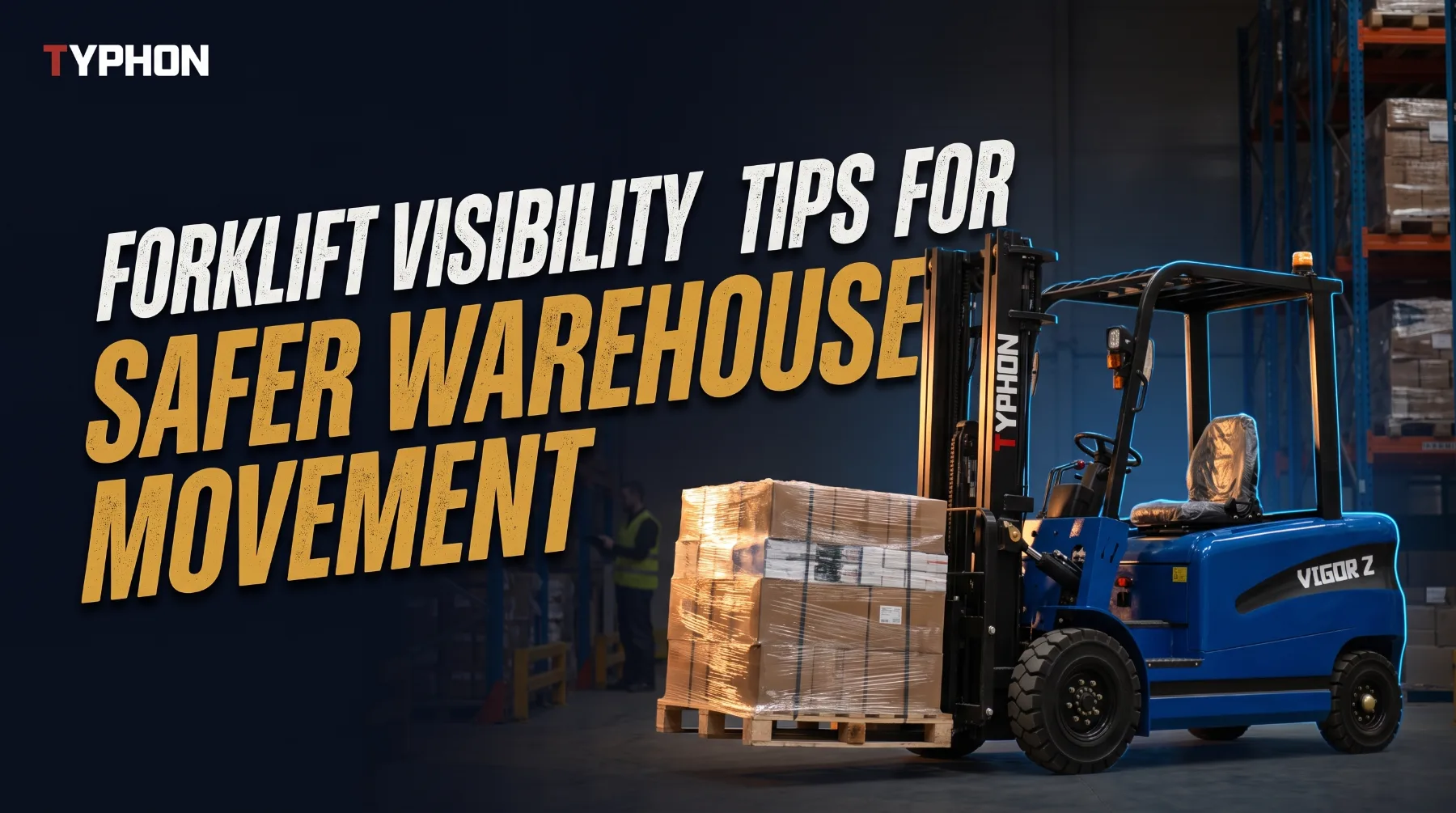
Every forklift move happens in a space shared with people, and that simple fact is what makes visibility the foundation of warehouse safety. A machine weighing several tons rolls through the same aisles where workers pick, pack, and walk, so an operator who cannot see a hazard cannot avoid it. Pedestrians struck by forklifts account for a large share of the most serious warehouse injuries, and nearly every one traces back to someone the driver never saw in time. Stock and equipment ride on that same clear view, because a collision rarely ends with just one casualty. A load driven into a rack leg can buckle a whole run of shelving, sending product crashing down and idling an aisle for hours while the mess gets cleared and the structure gets inspected. Damage of that kind costs far more than the goods themselves, tallying up in lost time, repairs, and the disruption that ripples across the entire operation. Confidence at the controls completes the reason visibility carries such weight, since an operator who sees the path clearly moves with purpose rather than hesitation. A driver forced to guess at what lies beyond a tall pallet slows to a crawl, second-guesses each turn, and drags down the pace of the whole floor, while one with an unobstructed view keeps goods moving smoothly and safely. Clear sightlines protect the people, the stock, and the productivity that a busy warehouse depends on, which is why visibility prevents incidents before they start.
Understanding the Blind Spots the Load and Mast Create
Bulky loads are the first culprit behind poor forklift visibility, because the very cargo the machine carries often stands directly between the operator and the path ahead. A tall or wide pallet can swallow the entire forward view, forcing the driver to lean, crane, and guess at what waits beyond it. This is exactly why operators are trained to travel in reverse when a load blocks the forward view, keeping the direction of travel in plain sight. Mast and overhead guard structures carve out their own hidden zones that many operators underestimate. The vertical channels of the mast, the hydraulic hoses running up it, and the bars of the overhead guard all interrupt the view in slices, so a pedestrian or a rack upright can hide behind a single obstruction at just the wrong moment. Knowing precisely where these structural blind spots fall lets an operator shift position slightly to catch what would otherwise stay concealed.
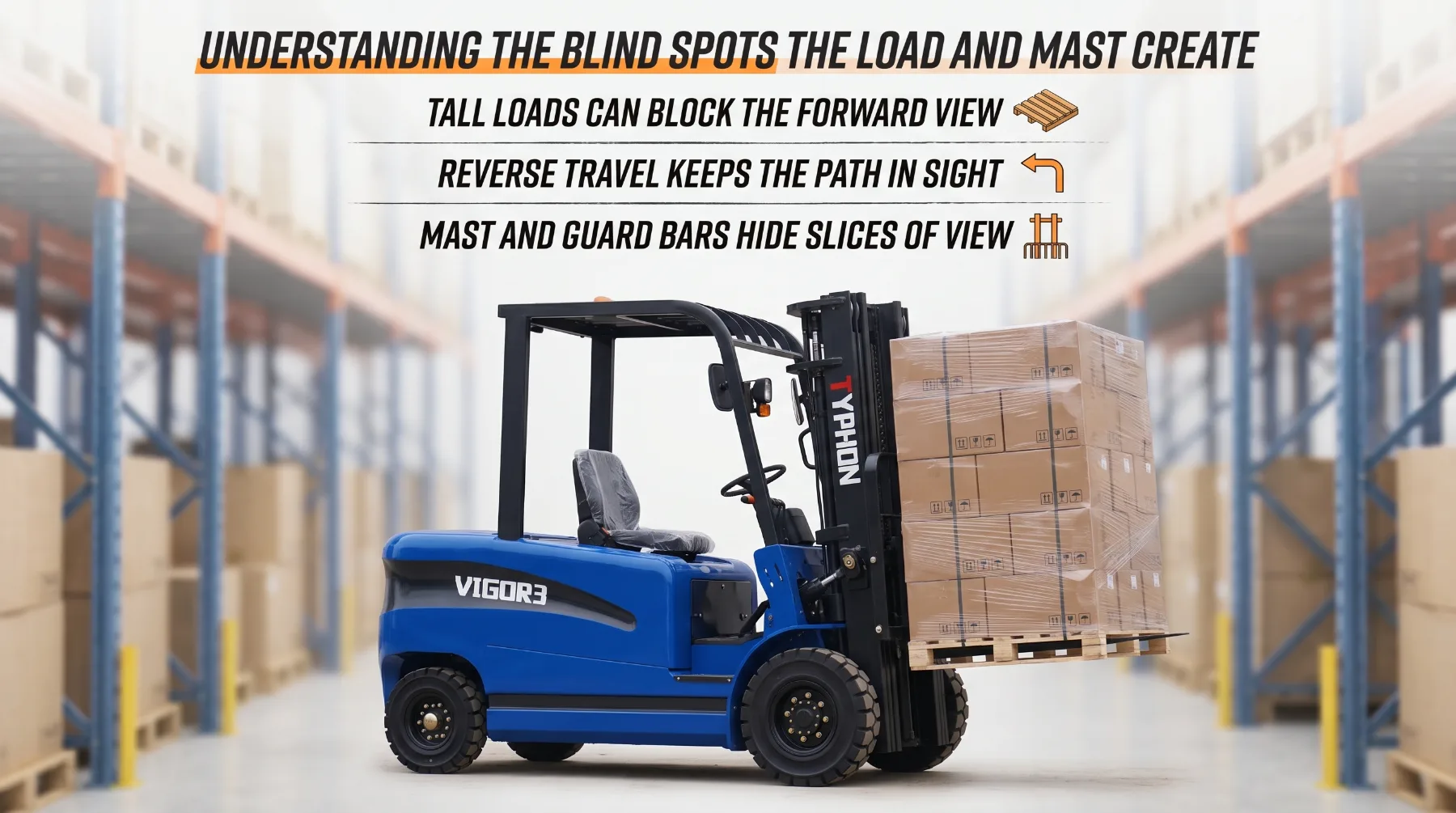 Rear and side awareness rounds out the picture, since a forklift steers from the back and swings its tail wide through every turn. The counterweight and the mounted attachments block much of the rearward view, and the areas close to the rear wheels vanish almost entirely from the seat, which matters enormously given how often these machines reverse. Mapping all of these zones with a coworker standing at various points around a parked machine reveals just how much stays hidden. The load, the mast, and the rear of the machine each create blind spots that ring the forklift, so recognizing where they fall is the first step toward working around them.
Using Mirrors, Cameras, and Visibility Aids
Technology extends an operator's sight into the zones the eyes alone cannot reach, turning hidden areas into visible ones with the right equipment fitted and maintained. Rearview and wide-angle mirrors cover the sides and the area behind the machine, a rear-mounted camera brings the blind zone onto a screen in the cab, and blue spotlights projected onto the floor warn pedestrians that a forklift is approaching a corner before it ever comes into view. Each aid closes a gap that the machine's structure and its load would otherwise leave open. Convex mirrors mounted at aisle intersections deserve special mention, because they solve a hazard no in-cab device can fully address. A dome or convex mirror fixed high at a blind junction lets both the operator and any approaching pedestrian see around the corner at once, revealing a collision course while there is still time to stop. Positioning these mirrors at every major intersection and blind crossing is one of the most cost-effective visibility upgrades a warehouse can make. Judgment must govern how heavily anyone leans on these aids, because no camera or mirror replaces an operator's own eyes and attention. Treat every device as a supplement that confirms what direct observation and active scanning already suggest, keep the lenses and glass clean so grime does not hide what they should reveal, and never trust a screen so completely that looking and listening stop. Mirrors, cameras, and warning lights extend an operator's view into the blind zones, but only when kept clean, well-positioned, and used to support attentive seeing rather than replace it.
Improving Warehouse Layout, Lighting, and Floor Markings
Design of the warehouse itself shapes visibility long before an operator climbs into the seat, because a well-organized floor removes the conflicts that no amount of careful driving can fully solve. Separating forklift travel routes from pedestrian walkways, widening aisles where traffic is heavy, and setting clear one-way lanes all cut down the moments when a machine and a person might cross paths unseen. A layout planned around movement keeps drivers and walkers apart by design instead of by luck. Lighting carries just as much influence, since even perfect sightlines mean little in a dim, shadowed aisle. Bright, even illumination throughout the storage areas, the loading docks, and the intersections lets operators spot people and obstacles at a distance, while dark corners and glare-filled transitions hide hazards until it is too late to react. Replacing failed fixtures promptly and adding light to notoriously shadowy zones pays back immediately in what drivers can see. Floor markings and signage translate a good layout into habits everyone follows, guiding traffic without a word. Painted pedestrian lanes, marked crossings, mirrors at blind corners, and posted signs at high-traffic junctions give both operators and workers a predictable pattern, so nobody guesses where a forklift will appear next. Keeping these markings fresh and visible, rather than letting them wear away under constant traffic, sustains the order they create. A thoughtful layout, strong lighting, and clear floor markings remove conflicts before they arise, giving operators a warehouse where visibility gaps carry far less risk.
Building Safe Operator Habits and Communication
Discipline at the controls turns available visibility into genuine safety, because the best mirrors and markings mean nothing if the operator fails to use them. Scanning constantly rather than staring straight ahead, checking mirrors and the camera before every movement, and looking in the direction of travel before committing to it all build a rhythm of seeing that catches hazards early. An operator who travels in reverse when a load blocks the forward view keeps the path plainly in sight instead of gambling on it. Speed control underpins every safe habit, because the moments that tempt a driver to rush are exactly the ones that cause harm. Slowing to a crawl at blind corners, easing through intersections, and reducing pace near people or dense inventory give the operator time to stop when something unexpected appears. A forklift moving deliberately can halt within a safe distance, while one hurrying to make up time cannot react to what it finally sees.
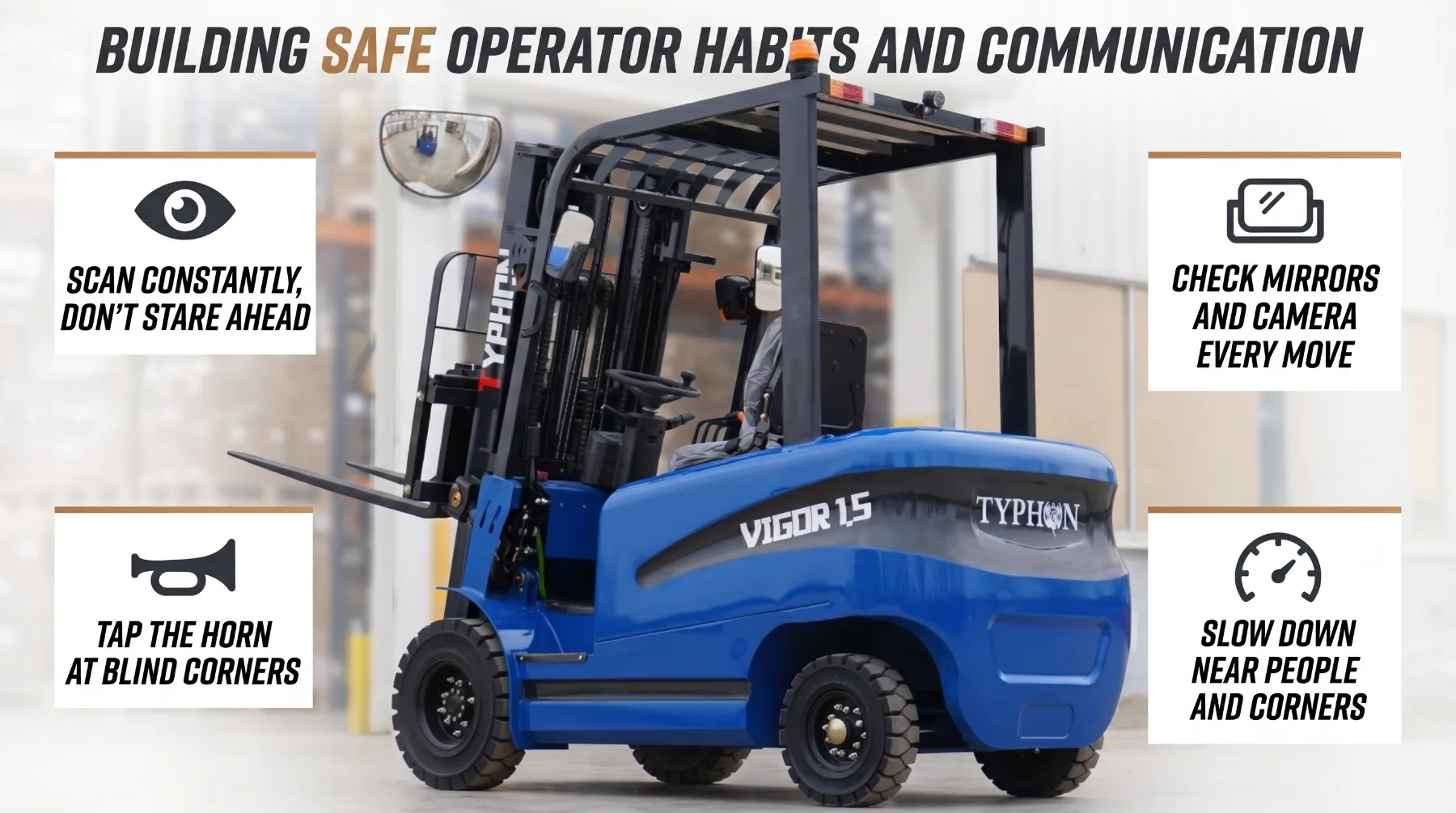 Communication fills the gaps that no single pair of eyes can cover on a busy floor. Sounding the horn at corners and before reversing, making eye contact with pedestrians before moving past them, and confirming a signal with a coworker before a blind maneuver keep everyone aligned on what the machine is about to do. A quick horn tap costs nothing and warns anyone nearby that a forklift is coming. Constant scanning, controlled speed, and active communication turn available visibility into real protection, making operator habits the force that puts clear sightlines to genuine use.
Running Pre-Shift Checks That Keep Sightlines Clear
Preparation confirms that every visibility tool works before the machine ever carries a load, so each shift should open with a check aimed squarely at what the operator needs to see and how others will see the machine. Wiping down the mirrors and adjusting them to cover the widest span of the sides and rear takes only a moment and undoes a shift's worth of accumulated grime and knocks. A mirror left smeared or bumped out of position offers a false sense of security worse than none at all. Powered aids demand their own verification, since a camera or warning device that failed overnight leaves a blind zone the operator may not notice until a near miss reveals it. Switching on the rear camera to confirm a clear, correctly aimed feed, testing the horn and the backup alarm so others can hear the machine, and checking that the warning lights and headlights all work keeps the whole system honest. These devices let others see and hear the forklift as much as they let the operator see out. Documentation turns a quick glance into a dependable routine the whole team can trust. Noting any mirror out of adjustment, any camera gone dark, or any alarm that stays silent, fixing the small issues on the spot, and reporting anything that needs a technician before the machine returns to service keeps a small fault from becoming a hidden hazard. A focused pre-shift check of the mirrors, camera, horn, alarm, and lights confirms every visibility tool is ready, so the operator starts the shift seeing clearly and staying seen rather than discovering a gap under load.
Conclusion
Forklift visibility and safer warehouse movement come together as a system where each piece strengthens the rest, and the whole picture holds once you address them in turn. Start by recognizing why clear sightlines prevent incidents on a floor shared with people on foot, then understand the blind spots that the load, the mast, and the rear of the machine create. Fit and maintain mirrors, cameras, and warning aids as supplements to the operator's own eyes, and improve the warehouse layout, lighting, and floor markings so conflicts never reach a blind zone in the first place. Build the scanning habits, speed control, and communication that turn available sightlines into real protection, and back it all with a pre-shift check that confirms every mirror, camera, and alarm is ready. Attend to all six, and the warehouse moves goods safely and smoothly rather than gambling on what the operator cannot see. Before your next shift, clean and adjust the mirrors, test the camera and alarm, and confirm your blind-corner mirrors are in place so the machine performs from the first pallet. When you're ready to put a dependable, well-equipped forklift to work, or need help matching the right machine to your warehouse, reach out to a trusted equipment specialist who can match reliable equipment to the results your work depends on.
Frequently Asked Questions
Why is forklift visibility such a serious safety concern? Because forklifts share tight aisles with workers on foot, and a machine weighing several tons cannot stop instantly. A tall load, the mast, and the counterweight all create blind spots, and most serious warehouse injuries trace back to a pedestrian the operator never saw in time. Clear sightlines close that gap, protecting people and stock while letting the operator work with confidence rather than hesitation. Should an operator drive in reverse when the load blocks the view? Yes. When a tall or wide load blocks the forward view, traveling in reverse keeps the direction of travel plainly in sight, which is far safer than creeping forward blind. The operator should still scan constantly, sound the horn at corners, and slow down through intersections. On ramps and grades there are exceptions to follow, so operators should stick to their site's training and the machine's guidance. What visibility aids make the biggest difference in a warehouse? Convex mirrors mounted at blind intersections rank among the most cost-effective upgrades, since they let both the operator and any approaching pedestrian see around a corner at once. Rearview mirrors and a rear camera cover the machine's blind zones, and blue warning lights projected on the floor alert pedestrians before a forklift rounds a corner. All of them work best when kept clean, well-positioned, and paired with attentive scanning rather than trusted blindly.
COMMENTS (0)
LEAVE A REPLY