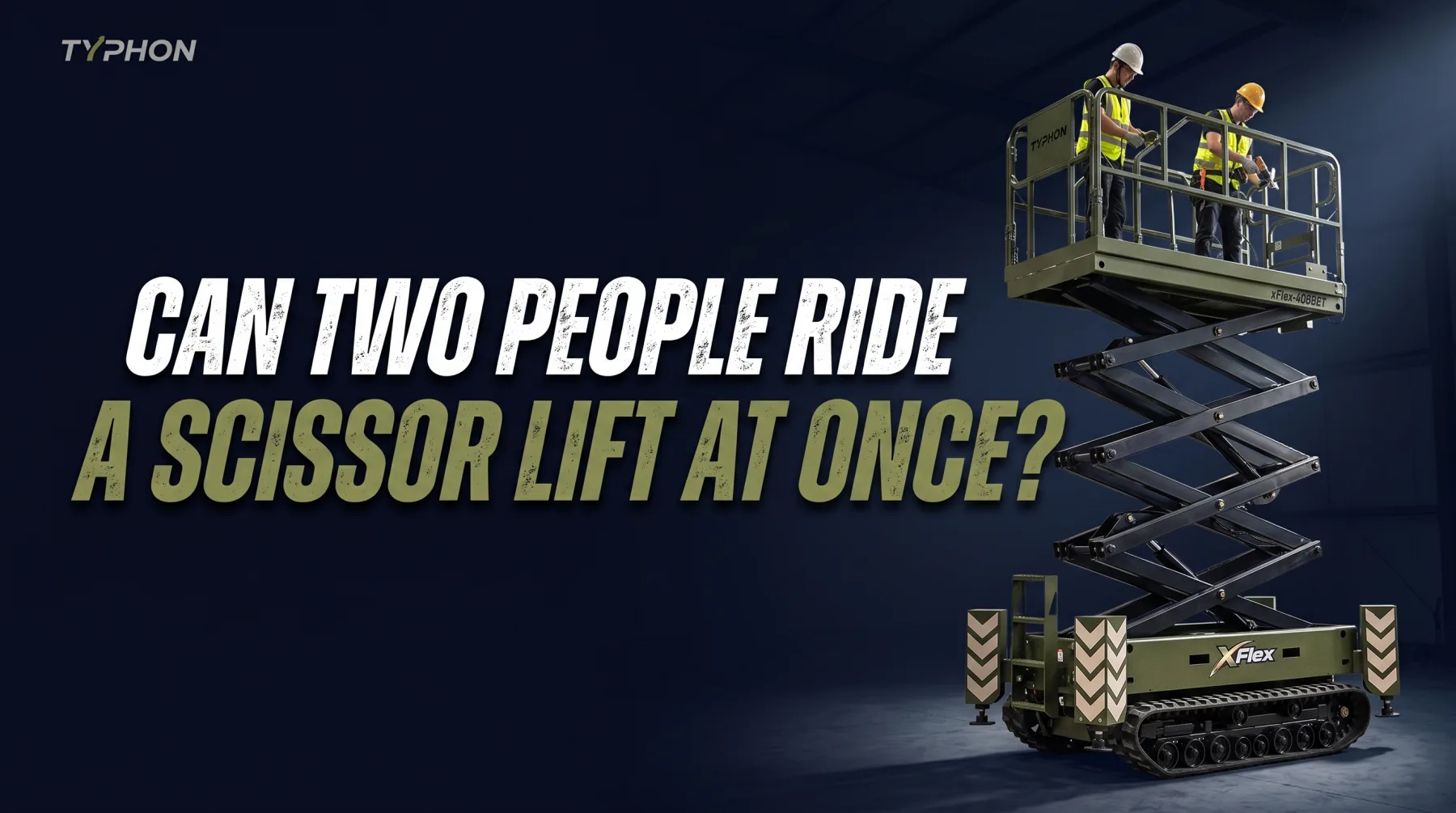
Two electricians on a warehouse retrofit share one scissor lift to speed up a long run of conduit, both climbing onto the deck with a coil of wire, a tool bag, and a box of fittings between them. The platform rises fine, the work moves fast, and everyone feels clever about saving a trip. Halfway down the aisle, though, the tilt alarm chirps and the lift refuses to extend further, because the combined weight of two workers plus their gear has crept past the number stamped on the plate. Nobody fell that day, but the machine was quietly telling them the math didn't add up. That moment is exactly why the two-person question deserves a straight answer before anyone steps on the deck.
The short version: yes, two people can often ride a scissor lift together, but only when the platform's rated capacity covers both workers and everything they carry. This guide breaks down what the capacity rating actually means, whether two occupants are legally and safely allowed, how the weight math really works, what OSHA and manufacturers expect, the mistakes crews make when doubling up, and the practices that keep a two-person lift safe. Here's what to know before you both climb aboard.
Understanding the Platform Capacity Rating
Every scissor lift carries a rated platform capacity, and that single number governs whether two people belong on the deck. Printed on a plate near the controls or the platform entrance, the rating states the maximum total weight the machine can safely lift, covering workers, tools, and material combined. Treat it as a hard ceiling, not a suggestion you can nudge past on a busy day.
Some machines list a second figure worth finding: the maximum number of occupants. Manufacturers often spell out how many people the platform is designed to hold alongside the weight limit, and that occupancy number matters just as much as the pounds. A lift rated for one person shouldn't carry two regardless of how light the pair seems, since the platform size and control layout were engineered around a single operator.
Key takeaway: Locate both numbers, the weight capacity and the occupant count, before you plan a two-person job. When the rating clears both hurdles, doubling up is on the table. When it doesn't, one worker rides and the other stays on the ground.
Are Two Riders Allowed, Legally and Safely?
Regulations don't ban two people outright, which surprises crews who assume solo operation is the rule. What the law and the manufacturer actually require is that you stay inside the machine's rated capacity and occupancy limit. Meet those conditions, and a two-person lift is both legal and safe; exceed them, and you're operating outside the machine's design whether one person rides or five.
Capacity is where the real answer lives. A larger scissor lift built for a 1,000-pound platform and two occupants handles a pair of workers with room for tools, while a compact single-person unit rated for 500 pounds does not. Rather than asking "can two people ride," ask "does this specific machine's rating cover two people plus their gear at the height we're working." That framing turns a vague worry into a number you can check.
Key takeaway: Two riders are allowed when the machine's capacity and occupant rating say so. The question is never about people in the abstract, always about the specific lift in front of you and what it's rated to carry.
Running the Weight Math Before You Climb On
Capacity math is simple, yet it's the step crews skip most often. Add up everything the platform will carry: both workers' body weight, their tools, and any material going up with them. Compare that total against the rated capacity, and leave a comfortable margin rather than loading right to the edge of the number.
Consider a realistic example. Two workers averaging 200 pounds each already put 400 pounds on the deck before a single tool joins them. Toss in a 40-pound tool bag, a box of fittings, and a coil of cable, and the load climbs past 500 pounds fast. On a lift rated for 500, that pair is overloaded the moment they step on; on a lift rated for 1,000, they're well within limits with room to spare.
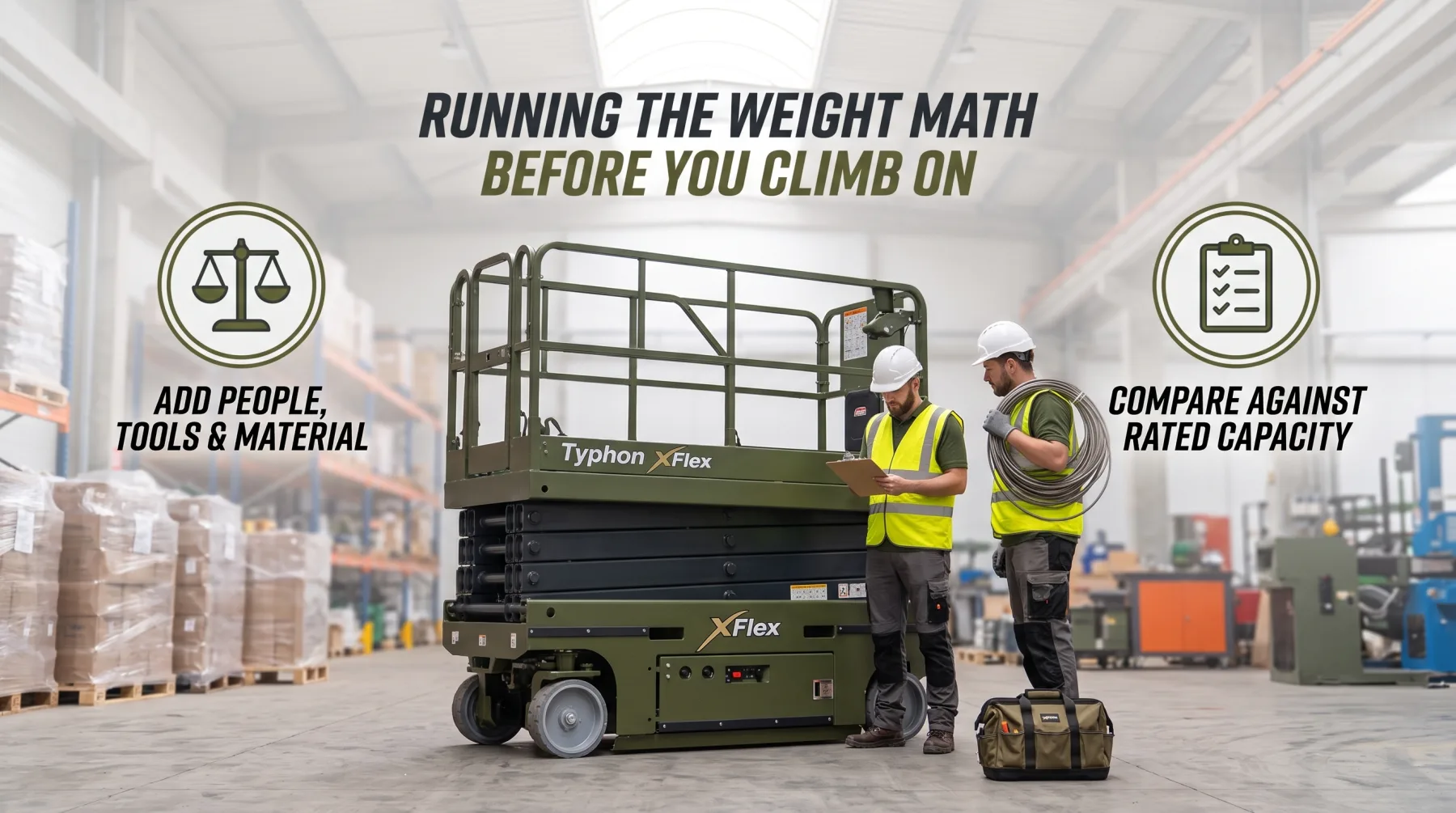
Follow this quick pre-lift capacity check:
- Add both workers' body weight as your starting figure.
- Include every tool, bag, and box going onto the platform.
- Factor in material like wire, pipe, or fixtures you'll carry up.
- Compare the total against the rated capacity, not a rounded guess.
- Keep a margin below the limit rather than loading to the maximum.
Key takeaway: Weigh the whole load, not just the people. A two-person job that fits the rating on paper still needs that honest tally of tools and material before the deck leaves the ground.
What OSHA and Manufacturers Expect
Federal safety rules point back to the manufacturer, which trips up crews looking for a simple yes or no. OSHA generally requires that aerial and scissor lifts be operated according to the manufacturer's instructions, so the machine's manual and capacity plate carry real regulatory weight. Ignore the rated limits, and you're not just risking a tip-over, you're risking a citation.
Manufacturer guidance fills in the specifics OSHA leaves to the machine. The operator's manual states the platform capacity, the maximum occupants, and often the rules for distributing weight across the deck, and those instructions are the standard an inspector holds you to. Reading that manual before a two-person task isn't busywork; it's how you confirm the machine was built for the job you're asking it to do.
Key takeaway: Treat the manufacturer's manual as your rulebook and OSHA as the enforcement behind it. When the manual clears two occupants within capacity, you're on solid ground both legally and physically.
Mistakes Crews Make When Doubling Up
Overloading tops the list, and it usually happens by accident rather than recklessness. Crews count the two workers, forget the tools and material, and drift past the rating without noticing until the tilt alarm speaks up. Adding a second person shrinks your weight budget for gear sharply, so the tools you'd carry solo may no longer fit with a partner aboard.
Poor weight distribution causes trouble even when the total stays legal. Two workers crowding one side of the platform, or leaning together toward the same corner to reach the work, shifts the load off-center and raises the tip risk as the deck climbs. Uneven loading on a raised platform is exactly the kind of imbalance a scissor lift punishes, so where the weight sits matters nearly as much as how much there is.
Reaching past the rails compounds the danger with two riders. When both workers stretch for a bracket or lean over the guardrail at the same time, the combined shift can upset a platform that would tolerate one person's reach. A common mistake worth naming: treating a two-person deck like it has twice the room to move, when in truth the extra body leaves less margin for error, not more.
Key takeaway: The pitfalls of doubling up are overloading, uneven weight, and shared over-reaching. Each one erases the safety margin a single operator would enjoy, so a two-person lift demands more discipline, not less.
Safe Practices for Multi-Person Lift Work
Planning the load comes first, since a safe two-person lift starts on the ground. Confirm the machine's capacity and occupant rating cover both workers plus their gear, then decide what actually needs to ride up versus what can wait below. Sending fewer tools and less material up with a second person keeps you comfortably inside the limit.
Distribute weight evenly once you're both on the deck. Stand on opposite sides or spread out rather than crowding one corner, keep material centered and organized so nobody trips, and adjust your positions as you move so the load stays balanced through every height. Both workers should keep their feet flat on the platform floor and stay inside the closed, latched guardrails the entire time the lift is elevated.
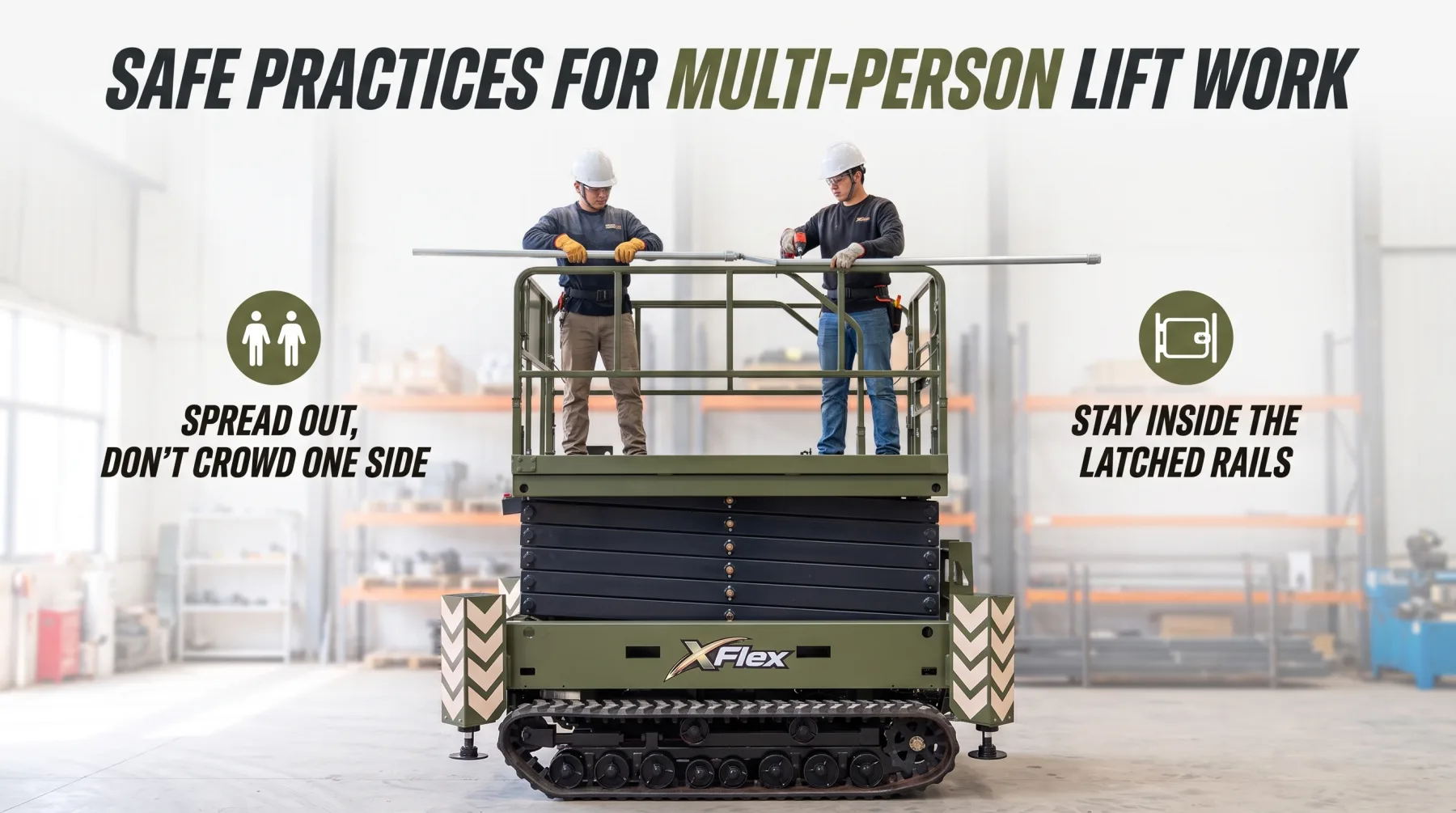
Coordinate your movements the way a good crew always does. Agree on who operates the controls, communicate before the platform moves, and never let both workers reach or lean in the same direction at once. Follow the same core precautions a solo operator would, inspecting the machine before use, setting up on firm and level ground, watching for overhead hazards, and knowing the emergency lowering system, since two people on the deck raises the stakes if anything goes wrong.
Key takeaway: A safe multi-person lift comes down to planning the load, balancing it, and coordinating every move. Handle those three, and two workers finish the job faster without trading away safety.
Conclusion
Two people can ride a scissor lift together, provided the machine's rated capacity and occupant limit genuinely cover both workers and everything they carry. Start by finding the capacity plate and the occupant rating, then run honest math on the combined weight of bodies, tools, and material before anyone climbs on. OSHA sends you straight to the manufacturer's manual, so treat those rated limits as the rulebook an inspector will hold you to. Avoid the doubling-up traps of overloading, uneven weight distribution, and shared over-reaching, and lean on solid practices instead: plan the load, balance it across the deck, keep both workers inside the rails, and coordinate every move. Done right, a two-person lift speeds up the work without adding risk. When you're ready to put a dependable, properly rated scissor lift to work, reach out to a trusted equipment specialist who can pair a reliable machine with the results your projects depend on.
Frequently Asked Questions
Can two people be on a scissor lift at the same time? Often yes, but only when the machine's rated platform capacity and its maximum occupant number both cover two workers plus their tools and material. A larger lift rated for a higher weight and two occupants handles a pair easily, while a compact single-person unit does not. Check the capacity plate and the manufacturer's manual before doubling up.
How do I know if two people exceed a scissor lift's weight limit? Add both workers' body weight, then include every tool, bag, and piece of material going onto the platform, and compare that total against the rated capacity on the machine's plate. Leave a margin below the limit rather than loading to the maximum. If the combined figure crosses the rating, one worker rides and the other stays on the ground.
Does OSHA allow more than one person on a scissor lift? OSHA doesn't ban it, but it requires you to operate the lift according to the manufacturer's instructions, which set the platform capacity and occupant limits. As long as two people and their gear stay within those rated limits, a multi-person lift is compliant. Exceed the rating or ignore the manual, and you risk both a tip-over and a citation.
COMMENTS (0)
LEAVE A REPLY