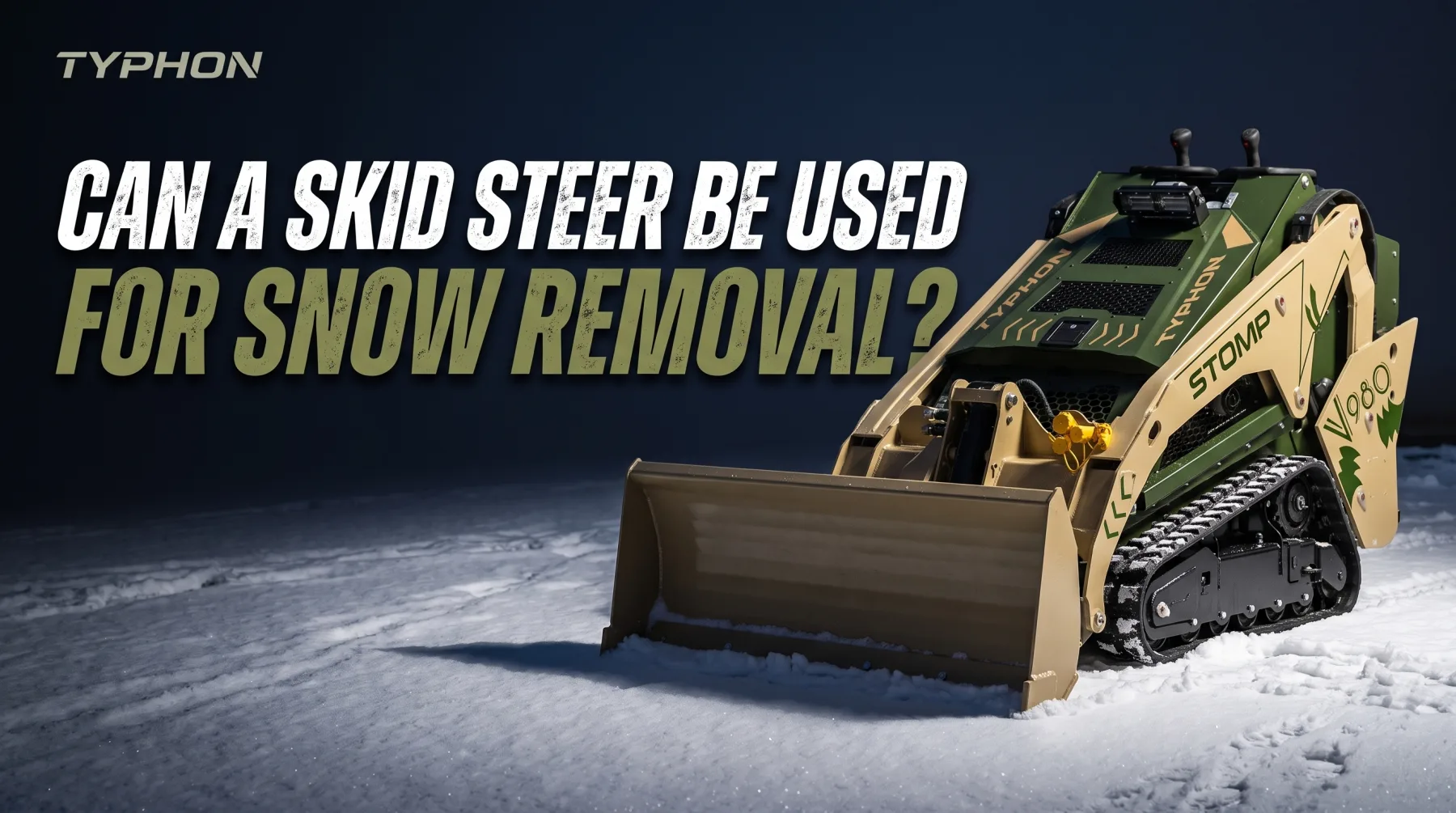
First snowfall of the season buries a commercial parking lot overnight, and a landscaping contractor stares at eight inches of packed powder he promised to clear by 6 a.m. His crew's plow trucks are already booked across town, but the skid steer that hauled mulch all summer sits idle in the yard. He bolts on a snow pusher, rolls onto the lot, and clears the whole thing in a single unbroken run before the coffee shop even opens. That machine, built for dirt and gravel, just earned its keep in a season most owners write off as dead weight. His question answered itself one morning: yes, a skid steer handles snow, and often better than the trucks parked beside it.
Turning a warm-weather workhorse into a winter earner comes down to the right attachments, a sensible match between machine and job, and a few habits that keep the equipment running when the temperature drops. This guide covers whether a skid steer truly suits snow removal, the attachments that make it work, how to pair the machine to the site, the surface and terrain factors that shape the job, practical tips for cold-weather operation and upkeep, and the return that winter work delivers. Read on before the first flakes fall.
Why a Skid Steer Handles Snow So Well
Snow removal rewards machines that maneuver tight, push hard, and swap tools fast, and a skid steer checks all three boxes. Compact enough to work sidewalks, loading docks, and cramped lots where a plow truck can't turn, it clears spaces a full-size rig simply skips. That agility matters most on commercial properties packed with islands, curbs, and parked cars.
Power backs up the agility. A skid steer's hydraulics drive heavy attachments through deep, wet snow that would bog down a lighter machine, and its low center of gravity keeps it planted while pushing a loaded pusher across a slick surface. Where a pickup plow shoves snow forward and hopes for traction, a skid steer digs in and moves the load with authority.
Versatility seals the case, and it's the reason so many crews already own the perfect snow machine without realizing it. The same unit that graded soil and moved pallets in July accepts a snow attachment in December, so one purchase covers two seasons of work. Rather than buying dedicated snow equipment that sits nine months a year, a contractor stretches a machine he's already paying for across the whole calendar.
Matching the Right Attachment to the Snow
Attachments turn a general-purpose loader into a purpose-built snow machine, and choosing the right one shapes how efficiently the job goes. Three tools cover nearly every winter scenario, and each shines in a different situation, so understanding what each does keeps you from forcing the wrong tool onto the job.
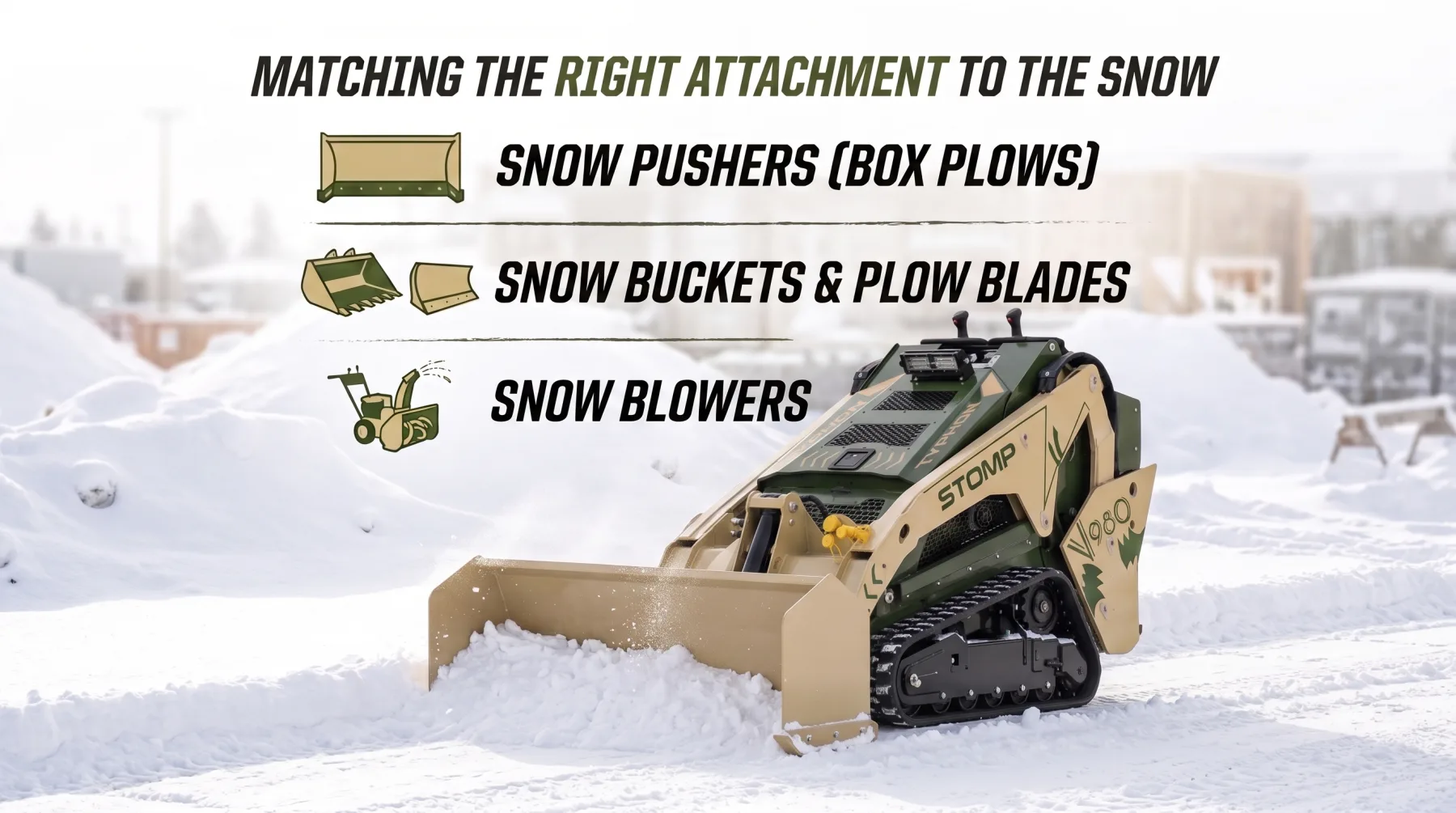
Here's a look at the attachments that see the most winter use:
- Snow pushers (box plows): Built like a wide box with side wings, a pusher moves huge volumes of snow across open lots in straight, efficient runs. It's the go-to for parking lots, warehouse aprons, and any large flat surface where speed and volume matter most.
- Snow buckets and plow blades: A bucket scoops and relocates snow, letting you stack it in a corner or load it into a truck for hauling, while an angled blade windrows snow to one side. Both suit tighter spaces and jobs where you need to place snow precisely rather than just push it forward.
- Snow blowers: For deep accumulation or snow that has to travel a distance, a hydraulic snow blower throws it clear rather than piling it, which prevents the mountainous drifts that pushes leave behind. Heavy snowfall regions and sites with limited stacking room lean on blowers.
Pushers handle the bulk-clearing muscle, buckets and blades add placement control, and blowers solve the deep-snow and nowhere-to-stack problem. Confirm that your machine's hydraulic flow and lift capacity match the attachment before you buy, since a blower especially demands strong flow to run at full throw. Match the tool to the snow you actually face, and one skid steer covers residential drives through sprawling commercial lots.
Pairing the Machine to the Job
Not every skid steer fits every snow job, so size the machine against the work before you commit it to a route. A compact unit clears sidewalks, small lots, and residential driveways with ease, threading between obstacles a larger machine would scrape. Scaling up to a bigger frame with more horsepower and hydraulic flow tackles sprawling commercial lots and deep, heavy snow that would strain a smaller loader.
Traction shapes the pairing as much as size does. Wheeled skid steers move fast between sites and handle plowed or paved surfaces well, making them a strong pick for lots you clear repeatedly through a storm. Compact track loaders, by contrast, grip snow and ice far better thanks to their broad footprint, so they hold their footing on slopes and unplowed ground where wheels would spin. Weigh the surfaces you clear most against the traction each style offers.
Attachment capacity ties the whole match together. A machine has to lift and carry the snow attachment you plan to run, so verify the rated operating capacity covers a loaded pusher or a heavy blower before you head out. Overreaching the machine's limits strains the hydraulics and slows every pass, while a well-matched pairing clears the lot faster and lasts longer. Think about the largest job on your route, then confirm one machine handles it cleanly.
Reading the Surface and the Site
Ground conditions dictate how a snow job unfolds, so scout each site before the snow ever falls. Paved lots and concrete drives take aggressive clearing without much worry, letting you scrape close to the surface for a clean finish. Gravel drives, unfinished lots, and delicate pavers demand a lighter touch, since a low-set blade gouges loose stone or cracks finished surfaces in a single careless pass.
Obstacles turn invisible under a blanket of snow, which is exactly where crews get into trouble. Curbs, manhole covers, drain grates, parking blocks, and landscape edging all disappear beneath fresh accumulation, and a pusher hitting a hidden curb at speed jolts the operator and damages the attachment. Walk high-value sites in the fall, note every obstacle, and mark the tricky ones with stakes so you clear confidently once the snow arrives.
A common mistake worth naming: setting the blade or pusher edge too low to chase a spotless scrape. Dropping the edge flush to the pavement catches every seam, expansion joint, and hidden obstacle, which shears bolts, bends cutting edges, and launches the machine when it strikes something solid. Ride the attachment slightly high on unfamiliar or rough ground, accept a thin layer left behind on the first pass, and lower it only where you know the surface is smooth and clear.
Running and Maintaining the Machine in Winter
Cold weather changes how a skid steer behaves, so adjust your routine before the season starts. Give the machine real warm-up time in freezing temperatures, letting the hydraulic fluid reach operating range before you ask it to push heavy loads, since cold fluid moves sluggishly and strains the system. A few extra minutes at startup saves a season of accelerated wear.
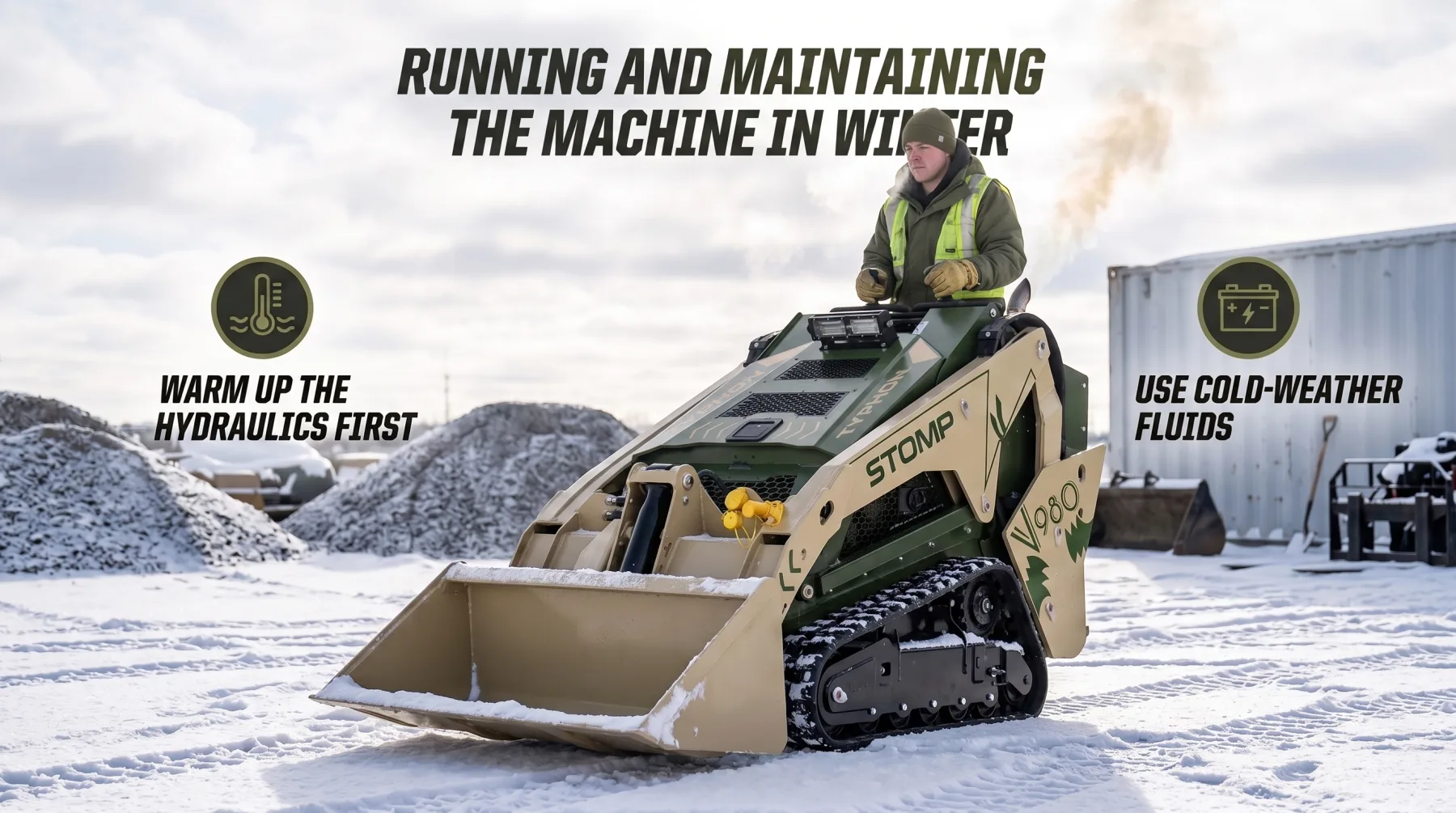
Fluids and the cab deserve winter-specific attention. Switch to the manufacturer's recommended cold-weather hydraulic fluid and engine oil weights, top off antifreeze, and confirm the battery holds a strong charge, because cold saps starting power fast. An enclosed cab with a working heater keeps the operator sharp across long overnight clearing runs, and a comfortable operator makes fewer costly mistakes when the storm drags on.
Upkeep during the season protects both the machine and your contracts. Rinse road salt and slush off the machine and undercarriage regularly, since salt corrodes metal and eats at seals over a winter of exposure. Grease the pins and attachment couplers often, keep the tracks or tires clear of packed ice, and inspect the cutting edges on your pusher or blade for wear that leaves snow behind. Following a steady maintenance schedule through the cold months keeps the machine dependable when a 3 a.m. call comes in, and safe operating practices protect your crew on icy, low-visibility sites.
The Value of Adding Snow Work
Revenue is where snow removal proves its worth, and the math favors contractors who already own the machine. A skid steer bought for landscaping, grading, or construction typically sits idle through winter, generating zero income while the payment stays due. Bolting on a snow attachment turns those dead months into a billable season, spreading the machine's cost across far more working hours.
Snow contracts also bring a steadiness that summer work often lacks. Seasonal agreements with commercial lots, property managers, and municipalities lock in recurring income through the winter, smoothing out the cash-flow dips that hit crews when the ground freezes. One machine servicing a handful of reliable snow accounts can cover a meaningful share of its annual cost before spring ever arrives.
Deciding whether snow work pays comes down to your local climate and your route. Regions with dependable snowfall reward the investment quickly, while areas that see only the occasional storm may favor renting an attachment for those stretches rather than buying one outright. Weigh the attachment cost against the contracts you can realistically land, factor in fuel and the extra winter maintenance, and the picture usually clears up fast. For crews in snow country, a machine that earns twelve months instead of eight is almost always the smarter play.
Conclusion
A skid steer absolutely handles snow removal, and for many contractors it outperforms the plow trucks parked beside it. Its compact size clears tight lots and sidewalks, its hydraulics push heavy loads that stall lighter machines, and its attachment versatility lets one unit earn through both seasons. Match the right tool to the snow, whether a pusher for open lots, a bucket or blade for precise placement, or a blower for deep accumulation, and size the machine and its traction to the sites you clear most. Scout each property for hidden obstacles, avoid the trap of setting the edge too low, and adjust your fluids, warm-up routine, and salt cleanup for the cold. Above all, run the numbers: a machine that works twelve months instead of eight spreads its cost across a full calendar and turns a dead season into a profitable one. When you're ready to put a dependable skid steer and the right snow attachments to work this winter, reach out to a trusted equipment specialist who can pair a reliable machine with the results your projects depend on.
Frequently Asked Questions
Can any skid steer be used for snow removal? Most can, though the fit depends on size and hydraulics. Compact units handle sidewalks and small lots, while larger machines with higher flow tackle big commercial lots and deep snow. Confirm your machine's rated operating capacity and hydraulic flow match the snow attachment you plan to run before heading out.
What is the best skid steer attachment for snow? It depends on the job. Snow pushers move large volumes across open lots fast, buckets and angled blades place snow precisely in tighter spaces, and hydraulic blowers throw deep snow clear where stacking room is limited. Many crews keep a pusher for lots and a blade or bucket for detail work.
Is a skid steer better than a plow truck for snow removal? Each has its place. Plow trucks cover long straight runs and travel between distant sites quickly, while a skid steer maneuvers tight lots, docks, and sidewalks a truck can't reach and pushes heavy snow with better traction. For compact commercial properties, a skid steer often clears faster and cleaner.

COMMENTS (0)
LEAVE A REPLY