
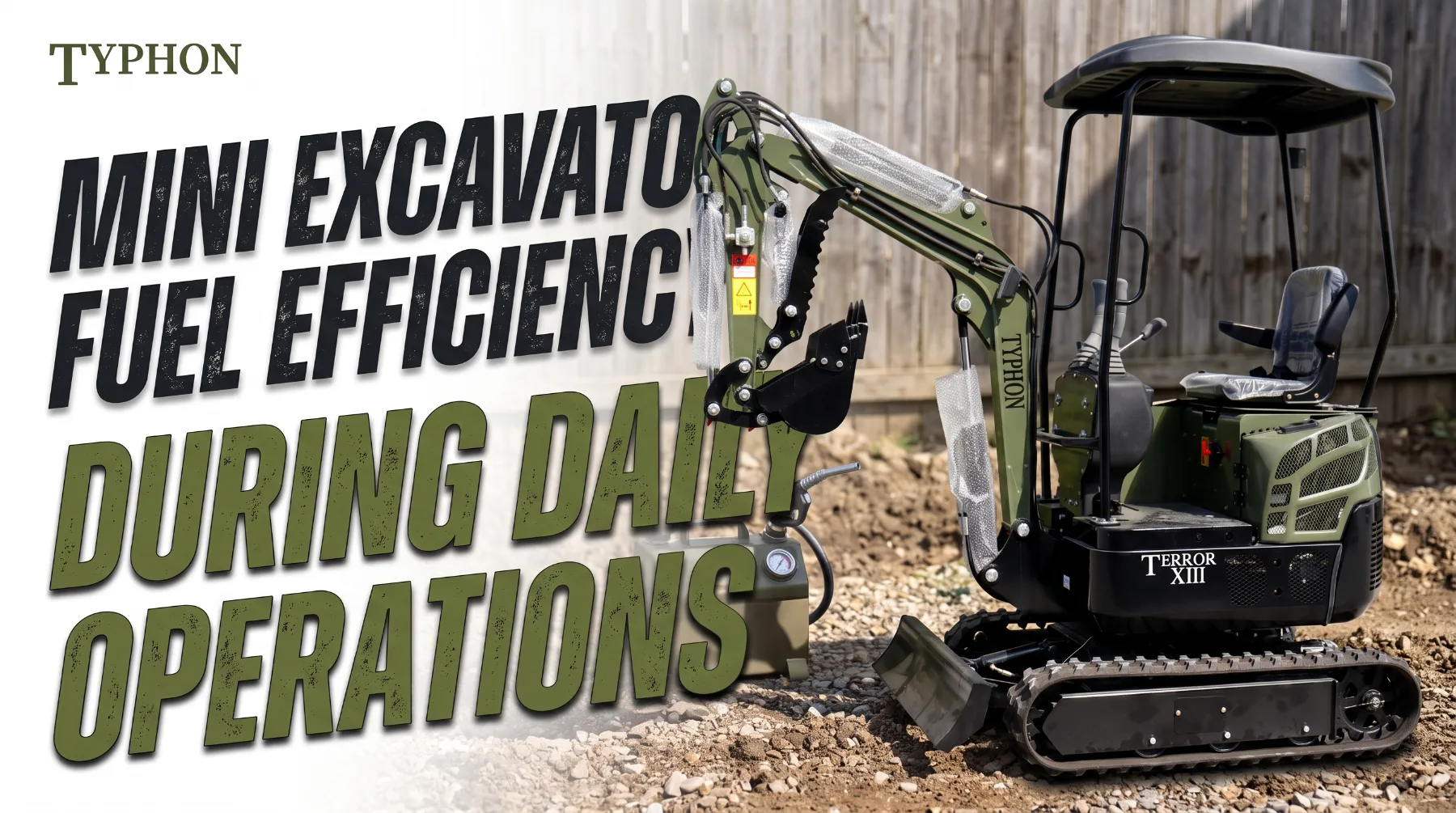
Why Every Gallon Counts on a Small Machine
Cost is the reason fuel efficiency rises to the top of any operator's concerns, because diesel is a recurring expense that never stops pulling at the bottom line. A mini excavator burns fuel every hour it runs, and across a full season those hours compound into a figure large enough to swing a job from profitable to break-even. Trimming even a modest percentage from daily consumption returns real money that a growing business can put toward payroll, parts, or the next machine in the fleet. Longevity of the equipment ties directly to how efficiently it burns fuel, which surprises operators who think of the two as separate concerns. A machine run thoughtfully, without needless high-throttle strain or endless idling, experiences less wear on its engine and components, so the same habits that save diesel also stretch the service life of the excavator. Efficiency and durability travel together, and neglecting one tends to cost you the other. Responsibility to the environment rounds out the case, and it carries weight with clients as much as with regulators. Burning less fuel means releasing fewer emissions, which matters on job sites where noise and air quality draw scrutiny and where a reputation for clean, considerate operation wins repeat work. Key takeaway: fuel efficiency protects your operating budget, extends the machine's working life, and lowers its environmental footprint, which is why every gallon deserves attention on a small excavator.
Operator Habits That Trim the Burn
Behavior at the controls is the single largest lever over daily fuel use, since the person running the machine decides how hard it works from one moment to the next. An operator who plans each sequence of digs, positions the machine to minimize repositioning, and works in smooth, efficient motions accomplishes the same task while asking less of the engine. Wasted movement burns wasted fuel, so a thoughtful approach at the controls pays back directly at the pump. Smoothness separates an efficient operator from a heavy-handed one, because abrupt, forceful inputs spike fuel consumption without speeding the work. Feathering the controls, avoiding sudden jabs of the joystick, and letting the hydraulics do their job at a measured pace keep the engine load steady rather than surging, which the machine rewards with lower burn. A calm, deliberate rhythm often moves just as much material as a frantic one, and it does so on less diesel.
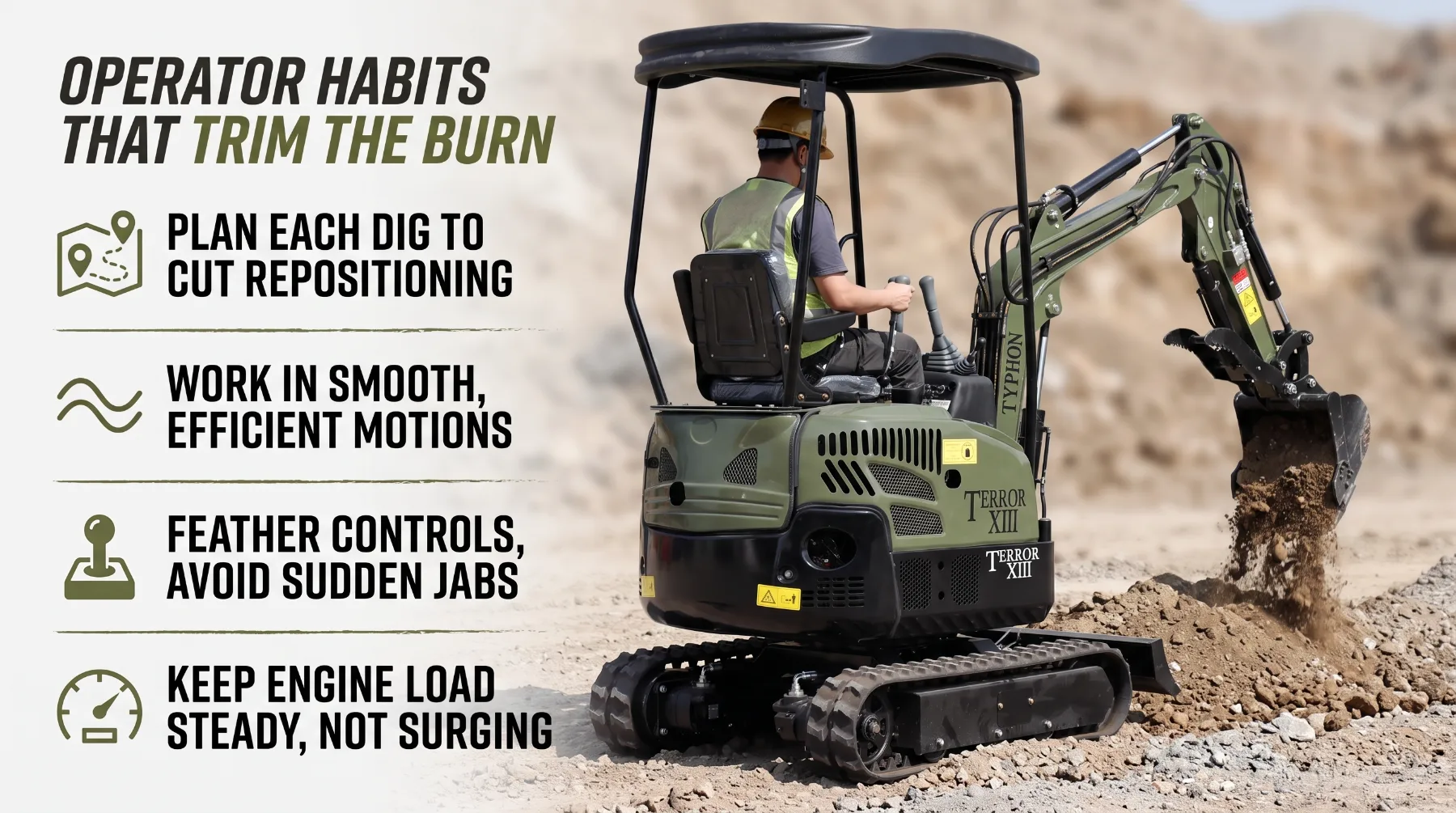 Planning the work before the bucket enters the ground compounds every other good habit an operator brings to the seat. Thinking through where spoil will go, how the machine will move between tasks, and which sequence keeps the excavator busiest with the least travel eliminates the aimless motion that quietly drains the tank. What this means: smooth inputs, minimal wasted movement, and a planned approach to the work let an operator complete the job on noticeably less fuel without giving up any productivity.
Managing Throttle and Idle Time
Throttle discipline attacks one of the most common sources of waste, because many operators run the engine wide open regardless of what the task actually demands. Most mini excavators perform light and moderate work perfectly well at a partial throttle setting, so matching engine speed to the job rather than defaulting to full power cuts fuel use without slowing the dig. Many machines also offer an economy or eco mode built precisely for this purpose, and using it on suitable tasks is an easy, immediate win. Idle time is the quieter thief, and it drains fuel while accomplishing nothing at all. An engine left running through breaks, loading pauses, or conversations with the crew burns diesel steadily for zero output, and those idle minutes stack into hours across a week. Shutting the machine down whenever a pause stretches beyond a short spell, rather than letting it hum away in the background, reclaims fuel that would otherwise vanish unnoticed. Auto-idle features bridge the gap for operators who cannot shut down for every brief stop, and they deserve to be switched on. When the controls sit untouched for a moment, an auto-idle system drops the engine to a low speed automatically, so the machine sips fuel during short pauses without any effort from the operator. Key takeaway: matching throttle to the task, cutting needless idling, and using economy and auto-idle features together strip out fuel waste that adds nothing to the day's work.
Maintenance Routines That Keep Efficiency High
Upkeep underpins fuel efficiency in ways that are invisible until neglect makes them obvious, because a poorly maintained machine works harder to accomplish less. Clean filters, fresh fluids, and healthy systems let the engine breathe and run as its designers intended, so a consistent maintenance routine is not merely about preventing breakdowns but about protecting the fuel economy the machine was built to deliver. A well-kept excavator simply burns less than a neglected one doing identical work.
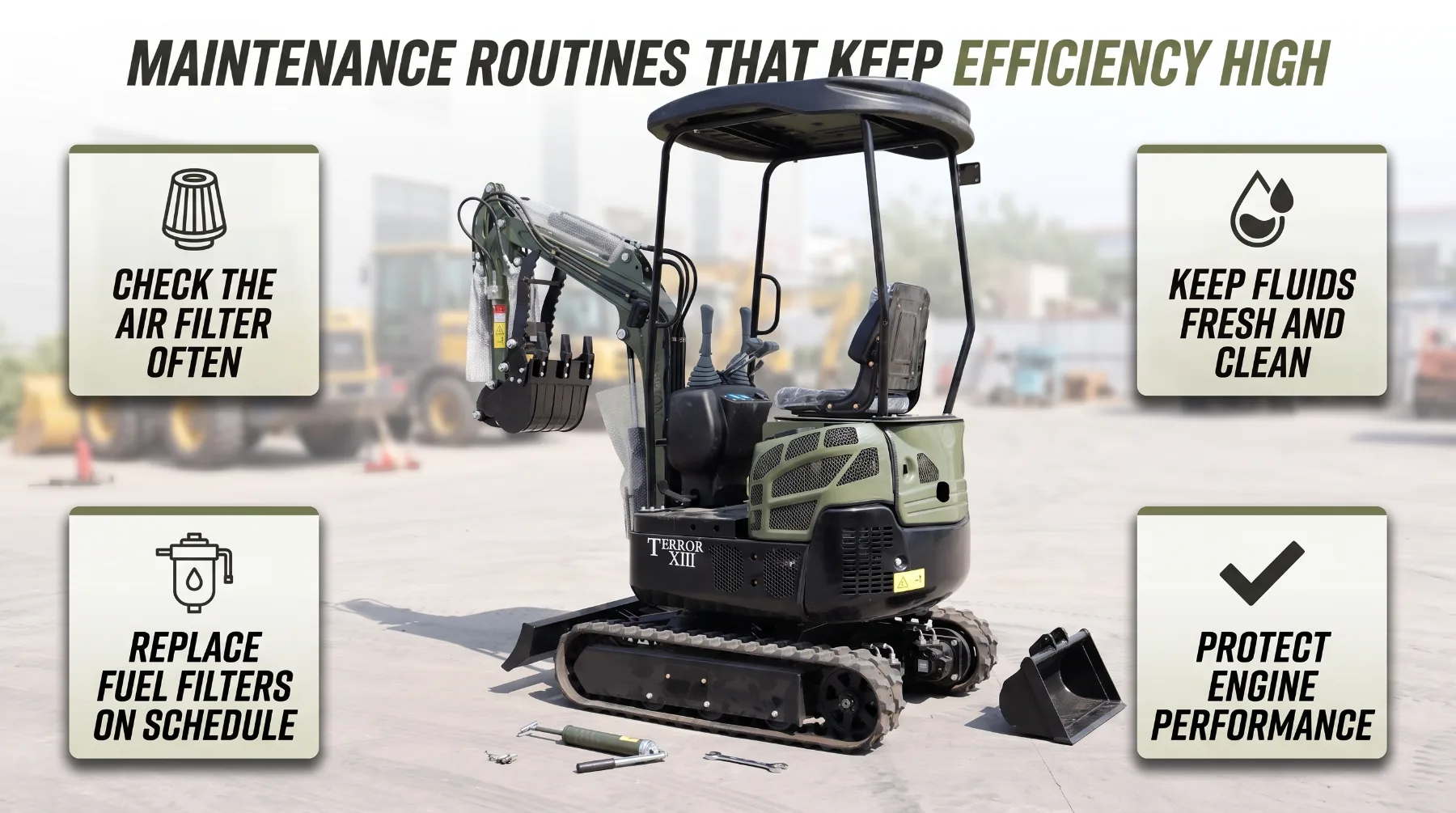 Air and fuel systems reward attention most directly, since restrictions there force the engine to strain. A clogged air filter starves the engine and drives up consumption, while dirty fuel filters and injectors disrupt the clean combustion that efficient running depends on, so keeping these components clean and replacing them on schedule keeps fuel use where it belongs. Checking the air filter regularly is one of the simplest habits with an outsized effect on the burn. Hydraulics and the undercarriage carry their own influence over efficiency, and both deserve a place in the routine. Fresh hydraulic fluid at the correct level lets the system move loads with less engine effort, while properly tensioned tracks and clean undercarriage components reduce the drag that makes the machine work harder to move. What this means: a steady maintenance routine covering filters, fluids, hydraulics, and the undercarriage keeps the machine running as efficiently as it was designed to, so upkeep and fuel savings go hand in hand.
Matching the Machine and Attachment to the Job
Sizing the excavator to the work sets a ceiling on how efficient any job can be, because a machine mismatched to the task wastes fuel no matter how well it is run. A unit too large for the work burns more diesel than the job requires and struggles to maneuver in tight quarters, while one too small strains at its limits and takes longer, consuming extra fuel through sheer effort. Choosing a machine correctly scaled to the typical demands of your work is a decision that pays back every single shift. Attachment selection shapes fuel use just as powerfully as the machine beneath it, since the right tool accomplishes the task with far less effort. A properly matched bucket, auger, or breaker sized to both the job and the excavator's capacity lets the machine work within its comfortable range rather than laboring against an oversized or ill-suited attachment. Pushing a machine to drive an attachment beyond its rating wastes fuel and risks the equipment, so matching the two protects both. Task suitability brings the whole idea together, because the goal is always to let the machine work efficiently rather than fight the job. An operator who selects the correctly sized excavator and pairs it with the appropriate attachment gives the engine a workload it can handle smoothly and steadily, which is exactly the condition under which a machine burns least. Key takeaway: matching machine size and attachment to the task lets the excavator work within its efficient range, so the right pairing saves fuel that a mismatch would quietly waste.
Tracking and Measuring What You Burn
Measurement transforms fuel efficiency from a vague intention into a managed number, because you cannot improve what you never track. Recording how much fuel the machine uses across a shift, a job, or a week gives you a baseline to work from and reveals whether your habits and routines are actually helping. Many modern mini excavators display fuel consumption data directly, and even a simple logbook noting fill-ups against hours worked builds a picture clear enough to act on. Patterns emerge once the numbers accumulate, and they point straight at where savings hide. A sudden rise in consumption can flag a maintenance issue, a change in operator behavior, or a job that pushed the machine too hard, so watching the trend lets you catch problems early and confirm which improvements are working. Data turns guesswork into decisions, showing you plainly whether that new idle habit or filter change actually moved the needle. Review and adjustment close the loop that makes tracking worthwhile, because numbers only help when you respond to them. Setting a rough target for consumption, comparing actual use against it, and adjusting operator habits or maintenance timing in response keeps efficiency improving rather than drifting. What this means: tracking daily fuel consumption gives you the baseline, patterns, and feedback to manage efficiency deliberately, turning a hidden cost into a number you can steadily drive down.
Conclusion
Fuel efficiency on a mini excavator comes together as a set of daily practices that reinforce one another, and the whole picture holds once you attend to each in turn. Start by recognizing why every gallon counts, protecting your budget, the machine's lifespan, and the environment, then sharpen the operator habits of smooth inputs, minimal wasted movement, and planned work. Manage throttle and idle time by matching engine speed to the task and using economy and auto-idle features, and back it with a maintenance routine that keeps filters, fluids, hydraulics, and the undercarriage in good order. Match the machine size and attachment to the job so the excavator works within its efficient range, and track your daily fuel consumption to turn a hidden cost into a number you can manage. Attend to all six, and the machine stays as profitable as it is productive, burning only the fuel the work truly requires. Before your next shift, note your current fuel use as a baseline, review your throttle and idle habits, and check the air filter so the machine runs clean from the first dig. When you're ready to put a dependable, fuel-efficient mini excavator to work, or need help matching the right machine and attachments to your projects, reach out to a trusted equipment specialist who can match reliable equipment to the results your work depends on.
Frequently Asked Questions
How much can better habits really lower fuel use? More than most operators expect. Fuel consumption on a mini excavator depends heavily on how the machine is run, so matching throttle to the task, cutting idle time, and working with smooth, planned motions can trim a meaningful share of the daily burn without slowing the work. Add consistent maintenance and the right machine-and-attachment pairing, and the combined savings across a season often add up to a figure worth real money. The habits cost nothing to adopt and pay back on every shift. Does letting the engine idle really waste that much fuel? Yes. An idling engine burns diesel steadily while accomplishing nothing, and those minutes stack into hours across a week of pauses for breaks, loading, and conversation. Shutting the machine down whenever a stop stretches beyond a short spell reclaims that fuel directly. For the brief pauses in between, an auto-idle feature drops the engine to a low speed on its own, so the machine sips rather than gulps whenever the controls sit untouched. How do I know if my machine is burning more than it should? Track it. Record fuel use against hours worked, whether through the machine's own display or a simple logbook, and watch the trend over time. Once you have a baseline, a sudden rise in consumption flags something worth checking, such as a clogged air filter, a maintenance issue, or a change in how the machine is being run. Comparing actual use against a rough target tells you plainly whether your machine is running efficiently or quietly wasting fuel.



COMMENTS (0)
LEAVE A REPLY