
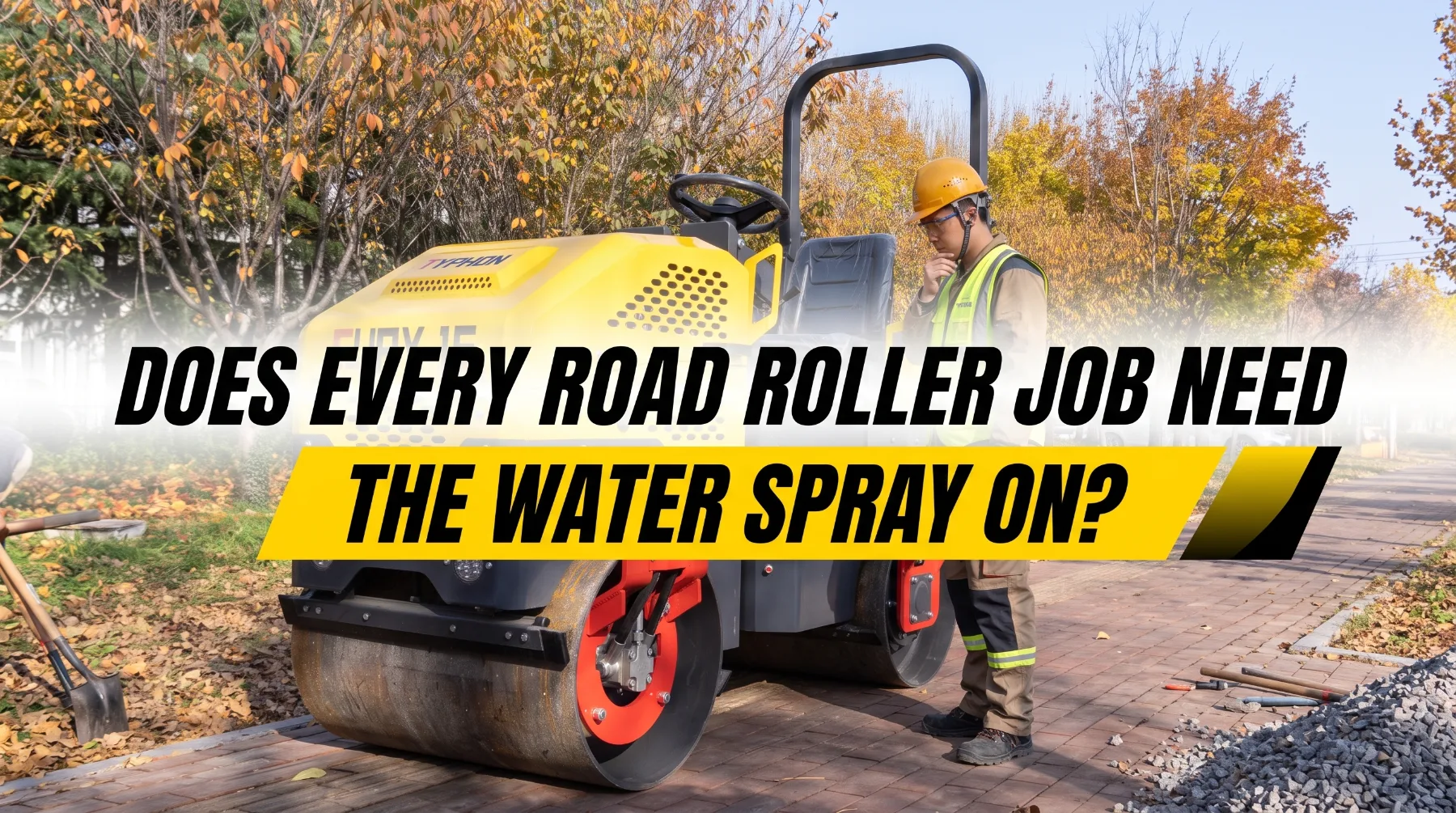
Why Road Rollers Carry a Water Spray System
Sticky material is the problem the water spray system was built to solve, and asphalt is the material that creates it. Hot mix asphalt arrives on the mat at high temperature, soft and tacky, full of bitumen that clings to anything it touches. When a bare steel drum rolls across that surface, the asphalt grabs the metal, tears away in patches, and rides along on the drum. The result is a pockmarked, uneven mat and a drum that grows dirtier and more destructive with every rotation. A thin film of water breaks that bond before it can form. The spray system feeds a measured flow of water onto the drum, usually through nozzles fed by an onboard tank, so the steel stays wet as it passes over the hot asphalt. Water on the surface of the drum keeps the bitumen from adhering, letting the roller press the mat smooth instead of plucking material out of it. That is the entire reason the system exists: to keep a hot, sticky surface from bonding to the very drum meant to compact it. Coverage and consistency are what make the system effective, which is why quality rollers spread water evenly across the full width of the drum rather than in random streaks. Even wetting means every part of the drum that contacts the mat stays protected, so the finish comes out uniform. The system is engineered around one job, and it does that job well, but the job only exists when the material on the ground is hot and prone to sticking.
When the Water Spray Earns Its Place
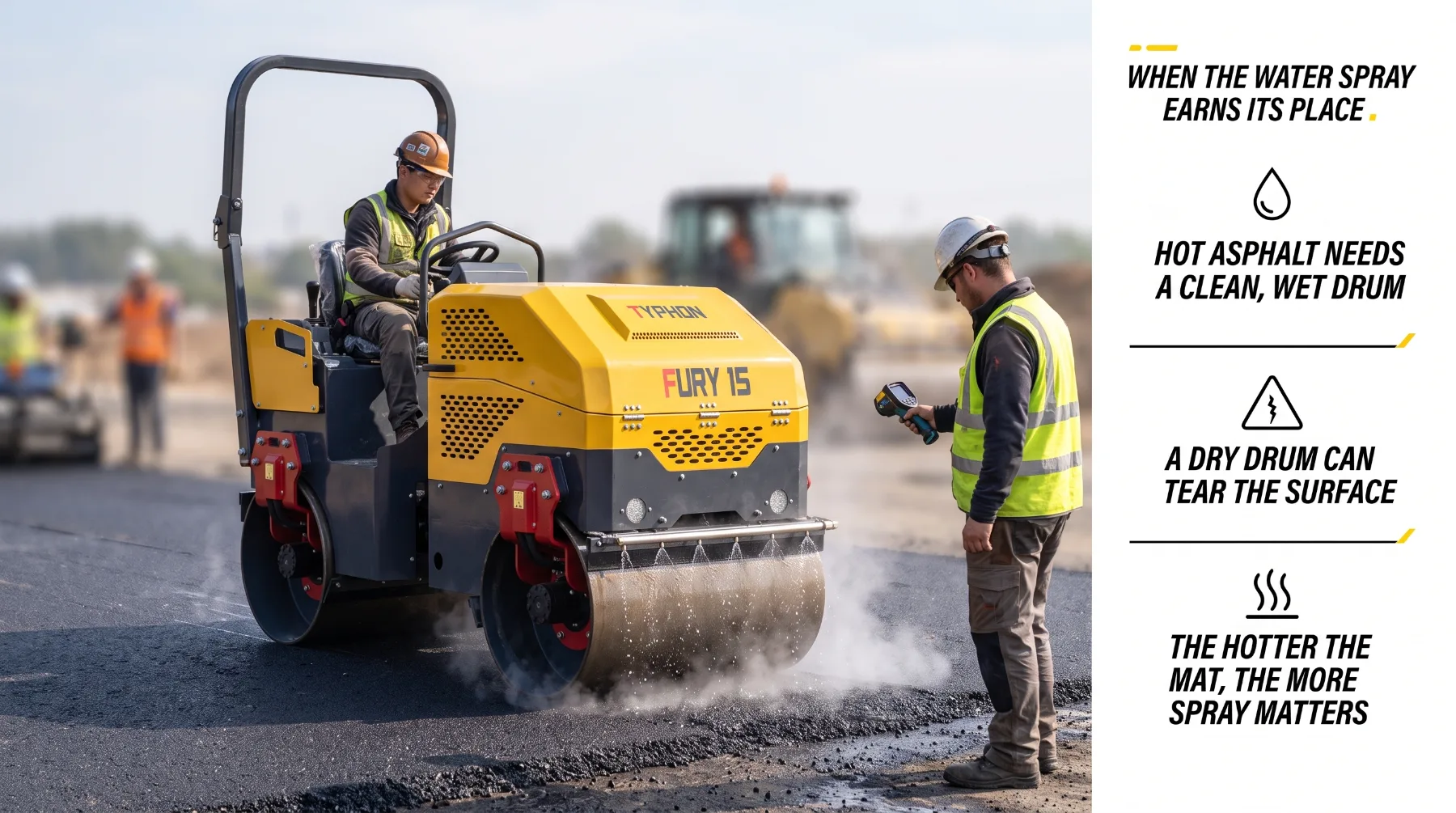 Asphalt compaction is the clearest case for running the spray, and it is where the system proves its worth on nearly every pass. Laying and compacting hot mix demands that the drum stay clean and wet from the first rolling to the last, because any asphalt that lifts onto a dry drum leaves a flaw in the surface and starts a cycle of tearing that grows worse as material accumulates. On a hot mat, the spray is not optional refinement. It is a core part of producing a smooth, dense, properly finished surface. Temperature drives the need, so the hotter the mat, the more the spray matters. Fresh asphalt behaves at its stickiest when it first hits the surface, still carrying the heat of the plant, and that is precisely when a bare drum is most likely to pick up material. An operator working close behind the paver, pressing the initial breakdown passes into the hottest portion of the mat, relies on the spray to keep the drum releasing cleanly. As long as the asphalt stays hot enough to grab steel, the water needs to flow. Vibratory work on asphalt reinforces the requirement rather than changing it. When a roller runs its drum in vibratory mode to drive density into the mat, the drum strikes the surface rapidly and repeatedly, giving hot asphalt countless chances to cling. A dry drum in that situation loads up quickly, so the spray remains essential throughout the compaction sequence. Whenever the surface underfoot is hot asphalt, the spray belongs on, and the operator's attention shifts to keeping the flow steady rather than deciding whether to use it at all.
Jobs Where the Spray Is Unnecessary or Even Harmful
Soil and subgrade compaction flip the logic entirely, because dirt does not stick to a steel drum the way hot asphalt does. When a roller compacts a base layer, an aggregate subgrade, or a lift of fill, the drum is pressing dry or lightly moistened granular material into a dense, stable foundation. That material has no bitumen to bond with the steel, so the reason for the spray simply is not present. Running water in this situation solves a problem that does not exist. Moisture control is the deeper concern on soil work, and this is where an unnecessary spray becomes an active mistake. Subgrade and base materials compact best at a specific moisture content, one that the crew has usually established deliberately through the mix design or on-site conditioning. Adding water from the roller's drum on top of that carefully managed moisture can push the material past its ideal point, softening the base, trapping water where it does not belong, and undermining the density the crew is working to achieve. A spray meant to protect a drum can quietly sabotage a foundation. Concrete and cold-weather asphalt present their own reasons to leave the switch off. Rolling is rarely the tool for finishing concrete, and where a roller does touch a cementitious surface, added surface water can interfere with the mix and weaken the result. Cold conditions raise a similar caution even on asphalt, because water on the drum in low temperatures cools a mat that is already losing heat too fast, and any water that lingers can freeze and damage both the surface and the system. In each of these cases, the spray works against the goal, and the disciplined operator recognizes that the default is off, not on.
Adjusting Spray Levels to Match the Work
Flow control is the skill that separates practiced operators from those who treat the system as a simple on-off switch. Most road rollers allow the spray rate to be adjusted, whether through an intermittent setting, a variable flow control, or timed pulses, so the operator can deliver exactly as much water as the drum needs and no more. The goal is a drum that stays reliably wet enough to release asphalt, not a drum that sheds excess water onto the mat and drains the tank before the shift ends.
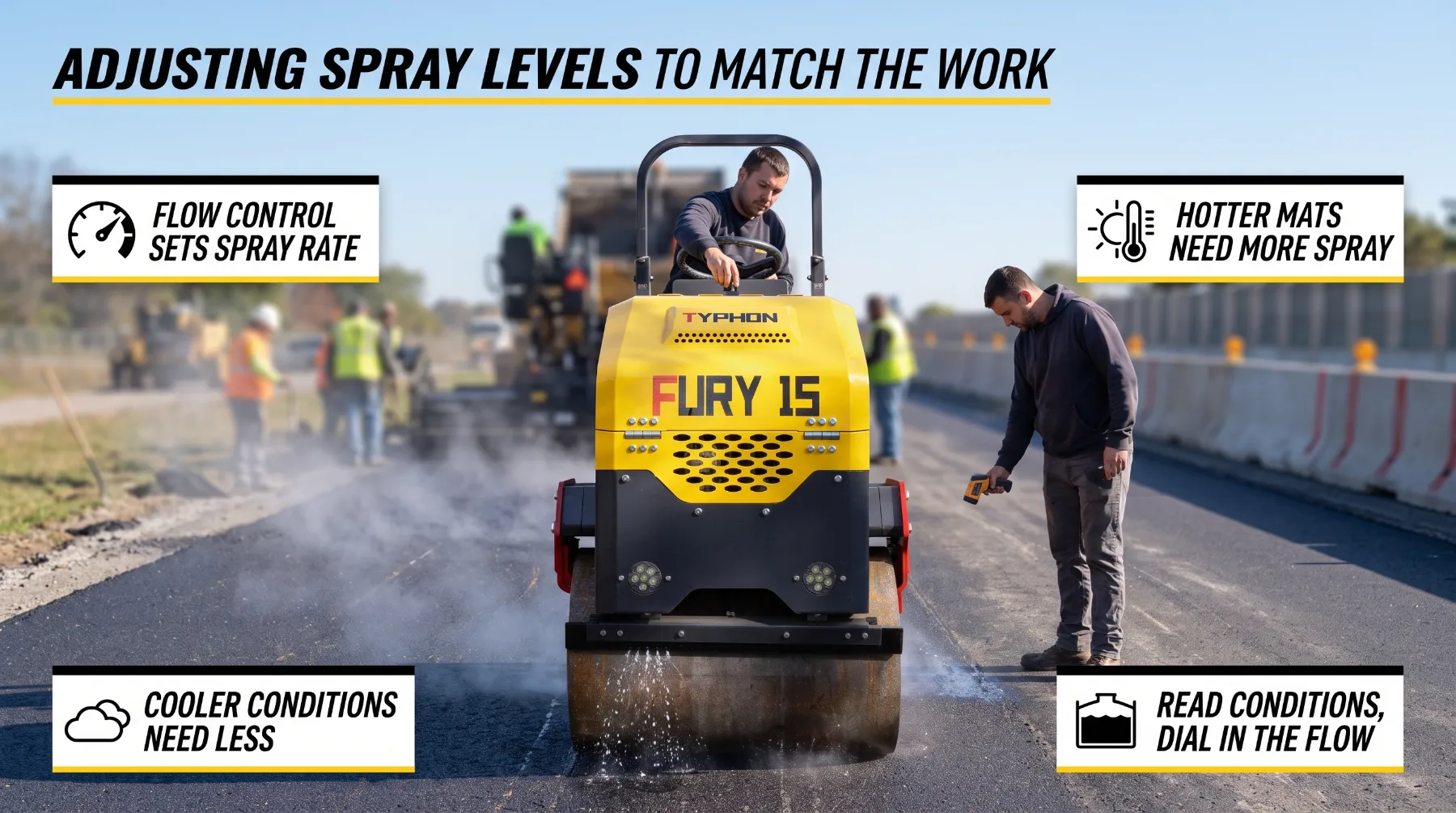 Conditions set the correct level, so the right flow on one job is the wrong flow on another. A very hot mat under a strong sun dries the drum quickly and calls for a more generous flow, while a cooler mat later in the compaction sequence, or a mild overcast day, may need only a light, intermittent spray to keep the drum clean. An operator who reads the surface temperature and the drying rate, then dials the flow to suit, keeps the drum protected without waste. That responsiveness is what good spray management looks like in practice. Tank endurance rewards this attention in a way that shows up over a full day. The water supply on a roller is finite, and a crew working a long paving run does not want to break for refills more often than necessary. Running the lowest flow that still keeps the drum releasing cleanly stretches the tank, reduces downtime, and keeps the roller moving with the paver. Matching water to need is therefore both a quality decision and a productivity one, and the operator who masters it gains on both fronts.
Best Practices for Operators on Every Job
Deciding before the drum moves is the habit that anchors good spray management. Rather than flipping the switch by reflex, the operator should ask what material lies ahead and what condition it is in. Hot asphalt calls for the spray on and set to suit the temperature. Soil, base, and subgrade call for it off, with moisture left to the plan the crew established. That single moment of intention, repeated on every job, eliminates most of the mistakes the system invites. Monitoring through the shift keeps the decision current, because conditions rarely hold steady from the first pass to the last. A mat that started blazing hot cools as compaction proceeds, and the flow that was right at breakdown may be more than the finish rolling needs. Weather shifts, sun gives way to cloud, and the drying rate on the drum changes with it. An operator who glances at the drum, watches how cleanly it releases, and adjusts the flow accordingly stays matched to the work instead of locked into a setting chosen an hour earlier. Maintenance and awareness round out the practice and protect the results. Checking that nozzles are clear and the spray bar wets the full drum evenly at the start of a shift takes little time and prevents dry streaks that mar a mat. Keeping the tank topped up, using clean water to limit clogging, and confirming the flow visually rather than assuming it all reflect the same principle of operating with attention. An operator who treats water spray as a deliberate, adjustable, well-maintained tool, applied only where it belongs, produces better surfaces, wastes less water, and keeps the machine working the way it should.
Conclusion
The water spray on a road roller answers one specific need: keeping hot, sticky asphalt from bonding to a steel drum. That makes it essential on asphalt compaction, where a wet drum is the difference between a smooth mat and a torn one, and largely pointless or even harmful on soil, base, and subgrade work, where added water disturbs a moisture balance the crew has carefully set. Cold conditions and concrete give further reasons to leave the switch alone. Between those extremes sits the operator's real job, which is not simply turning the spray on but matching the flow to the temperature, the material, and the moment, then watching it and adjusting as the shift unfolds. Deliver too little on a hot mat and the surface tears; deliver too much anywhere and you cool the mat, waste water, or weaken the base. Reading the work, setting the flow to suit, and keeping the system clean is what turns a habit into a skill. Handle the spray with that intention, and every pass works toward the result the crew is after. When you want rollers and compaction equipment matched to the surfaces and conditions your projects demand, a trusted equipment specialist can help you put dependable machines to work.
Frequently Asked Questions
Do I need the water spray on when compacting soil or a gravel base? Usually, no. The spray is mainly used to prevent hot asphalt from sticking to the drum. Soil and gravel should have the correct moisture content already, so extra water can reduce compaction quality. How do I know how much water to use on an asphalt job? Use the minimum flow needed to keep the drum clean. Increase flow if asphalt starts sticking and reduce it if water pools on the mat. Adjust the spray as temperature and surface conditions change. What happens if I run the spray in cold weather? Too much water can cool the asphalt too quickly and reduce the compaction window. It can also freeze in the spray system. Use minimal or intermittent spray and drain the system when freezing is possible.


COMMENTS (0)
LEAVE A REPLY