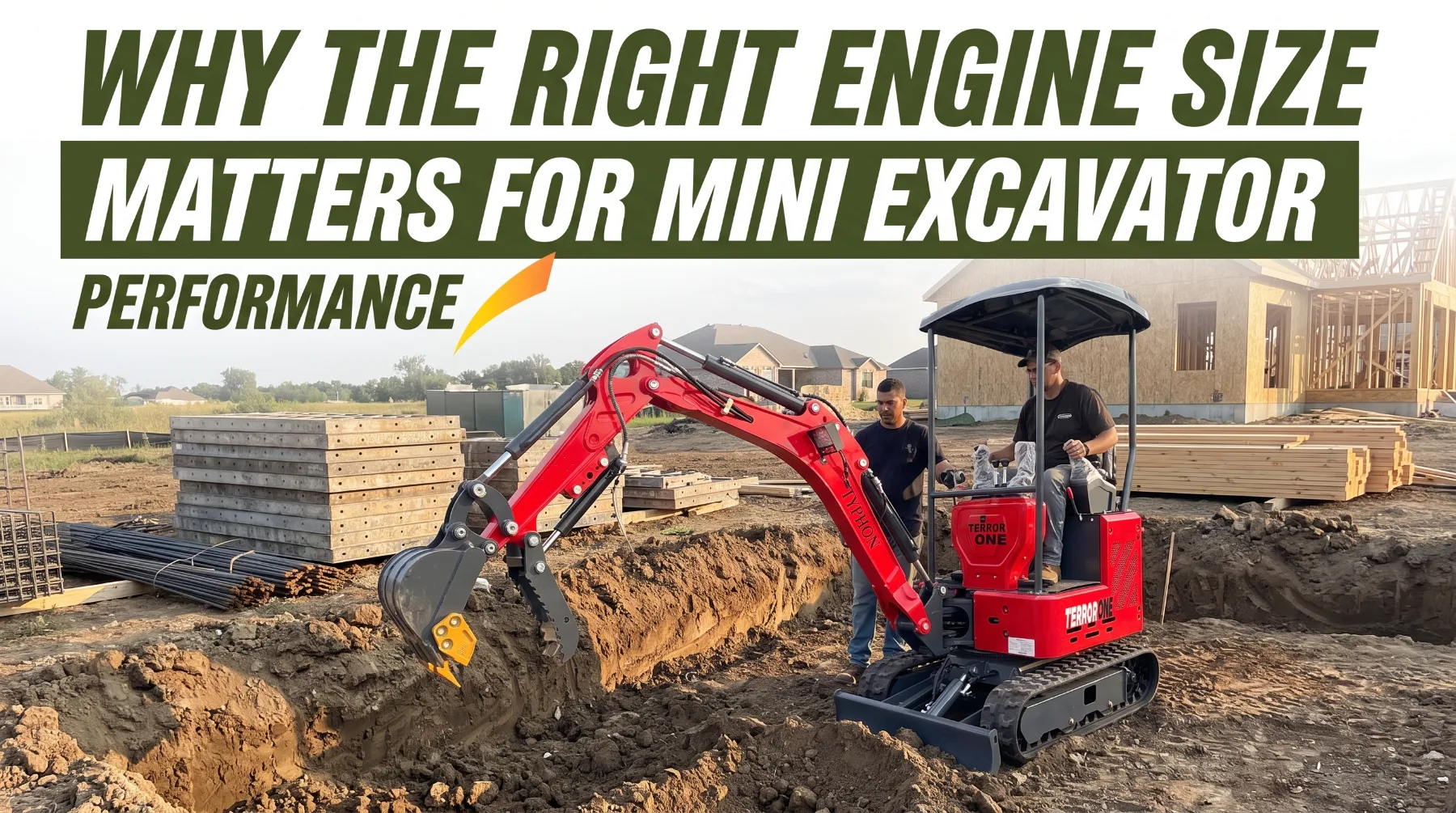
Engine size influences how effectively a mini excavator can convert fuel into mechanical and hydraulic work. While operating weight, dig depth, and bucket capacity are important specifications, engine displacement affects the torque and power available to drive the hydraulic pump, travel motors, swing system, and auxiliary circuits. When the engine is properly matched to these demands, it can maintain sufficient output as hydraulic pressure rises during digging, lifting, and attachment operation. An undersized engine may operate closer to its maximum load, causing RPM to fall under heavy demand, reducing hydraulic performance, increasing fuel consumption, and placing greater thermal and mechanical stress on the powertrain.
Engine sizing also affects how consistently the excavator performs across different applications. Larger displacement does not automatically mean better performance, because the engine must be matched to the hydraulic pump capacity, system pressure, machine weight, cooling system, and intended duty cycle. An engine with insufficient output can limit breakout force, hydraulic response, travel performance, and attachment capability, while an unnecessarily large engine can add fuel consumption, cost, and excess power that the hydraulic system cannot effectively use. The correct engine size is therefore the one that provides adequate power reserve for the excavator's hydraulic and mechanical loads without continuously operating at its limits.
What Engine Size Means on a Mini Excavator
Engine size on a mini excavator comes down to two figures that work together: displacement and horsepower. Displacement is the total volume the engine's cylinders sweep through in a full cycle, usually measured in liters, and it represents how much air and fuel the engine can burn per stroke. Horsepower describes the rate at which the engine can sustain work over time. Displacement is the foundation; horsepower is what that foundation produces.
On a compact machine built to work hard in tight quarters, every fraction of a liter carries weight. A larger displacement generally gives the engine more room to produce strong torque and steady horsepower, especially the low-end grunt that heavy digging demands. From that single capacity flows the machine's digging force, its hydraulic output, and its ability to keep working when the material fights back. Engine size isn't a footnote on the spec sheet, it's the base the rest of the machine's performance stands on.
Key takeaway: Engine size combines displacement and horsepower, and together they set the ceiling on the power a mini excavator can produce.
How Engine Size Affects Digging Force and Hydraulic Performance
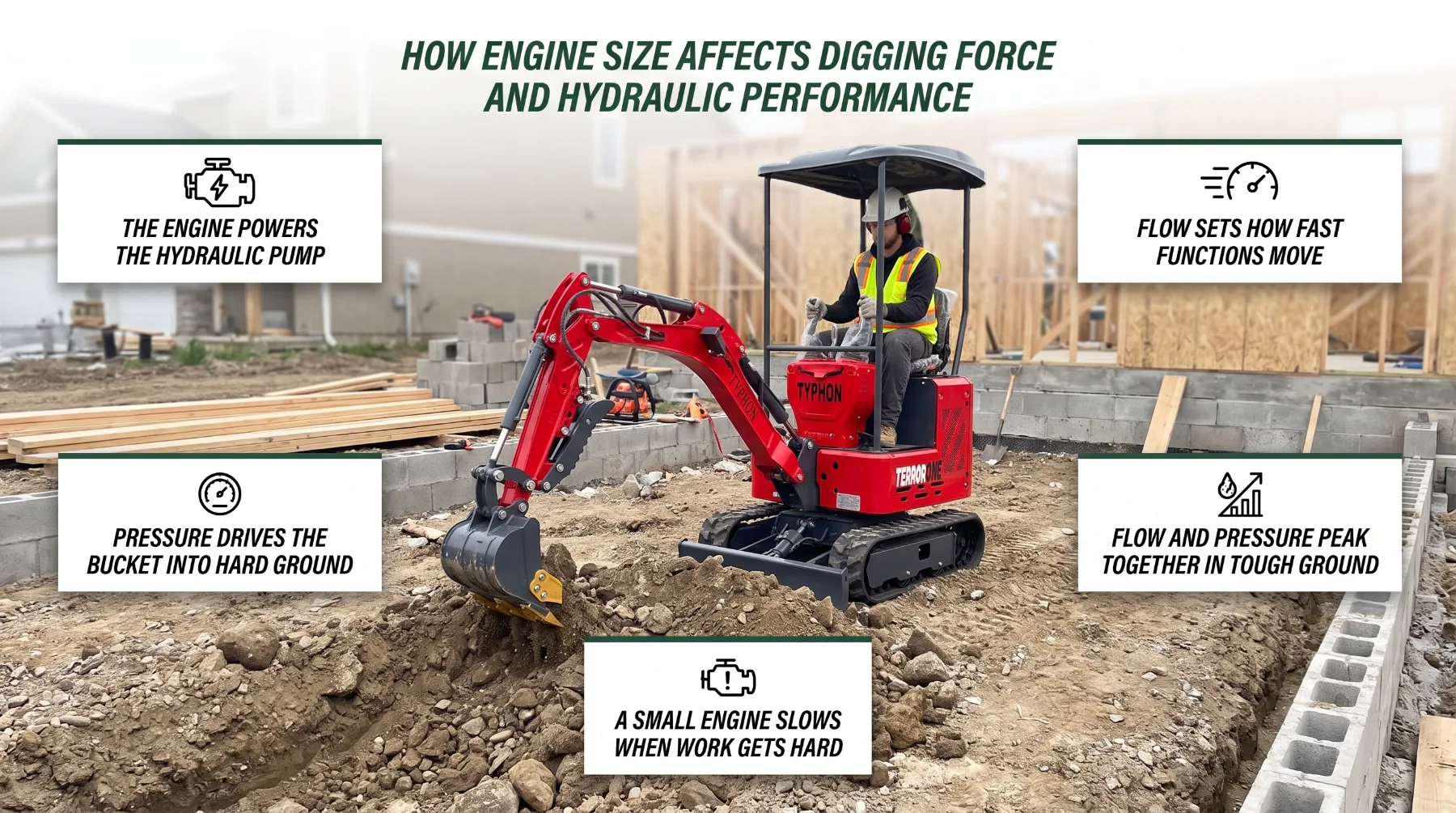
A mini excavator does almost none of its real work mechanically. The engine drives a hydraulic pump, and that pump pressurizes the fluid that powers the boom, arm, bucket, swing, and travel. Every dig, curl, and lift begins as engine output converted into hydraulic energy, which makes the pump a constant load whenever the machine works. Engine size determines how much power reaches that pump, and therefore how much flow and pressure the machine can sustain.
Those two hydraulic qualities do the visible work. Flow sets how fast the functions move, so lift and cycle speed stay brisk. Pressure sets how much force the bucket can drive into hard ground. When the machine crowds into packed clay, both peak at once, it needs high pressure to break the material and steady flow to keep moving through it. An engine with genuine size holds that flow even as pressure climbs, so the bucket bites and keeps digging. A smaller engine can't sustain both, so the machine slows exactly when the work turns tough.
Key takeaway: Engine size feeds the hydraulic pump that drives every function, so it directly governs digging force, lift speed, and cycle times under load.
Why Undersized Engines Struggle With Heavy Work
An undersized engine reveals itself the moment real material meets a demanding cycle. Digging loose topsoil, it may seem fine. Push it into compacted fill, wet clay, or fractured rock, and the machine bogs down, because the engine can't feed the pump the power it needs to hold flow against rising pressure. Operators feel the bucket stall mid-dig, the arm crawl, and cycles stretch out. They compensate by taking smaller bites and working slower, so productivity quietly erodes across the shift.
The strain runs deeper than lost pace. A machine forced to run near its ceiling all day works harder to accomplish the same task, which stretches every job longer and burns more fuel doing it. Duty cycle sharpens the problem. Occasional light digging gives the engine frequent breaks, but continuous production keeps the hydraulics loaded almost constantly, leaving no room to recover. Stack heavy material onto a high-intensity duty cycle, and an undersized engine simply can't keep up. In demanding work, undersizing is usually the costlier mistake, because the strain compounds every single shift.
Key takeaway: An undersized engine bogs down in heavy material and can't sustain a demanding duty cycle, so it loses productivity and works itself hard every shift.
The Trade-Offs of Oversizing
More engines are not automatically better, because greater capacity carries real costs. A larger engine burns more fuel to produce its greater output, and if that output sits unused on light work, you're paying for capability you never call on. In a class of equipment prized for compact efficiency, that waste adds up hour after hour.
Weight is the other penalty, and it matters more on a mini excavator than most buyers expect. These machines often earn their keep in tight, sensitive spaces, working on finished surfaces or squeezing through narrow access. Added engine weight raises the machine's overall mass and ground pressure, which can work against the nimble, low-impact operation the class is built for. Purchase price climbs too. The goal isn't the biggest engine on the page, it's a genuine match that carries your hardest realistic day with reserve to spare, and no more.
Key takeaway: Oversizing wastes fuel, adds weight and ground pressure, and raises purchase cost, so paying for unused capacity works against the machine's compact advantage.
How Engine Size Ties to Attachment Capability
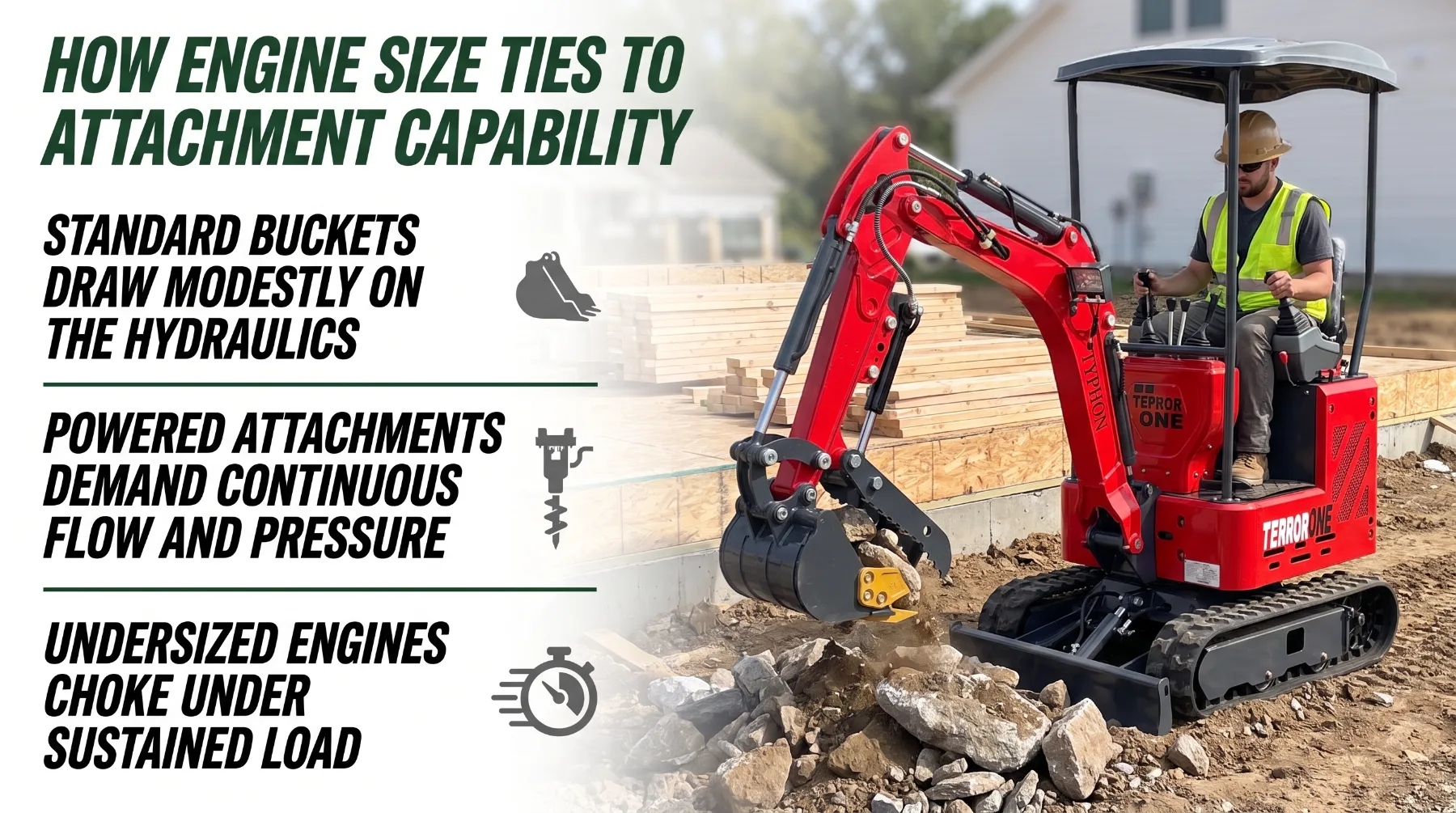
The attachment on the coupler is where engine size truly gets tested. Simpler tools like a standard digging bucket draw modestly on the hydraulics, loading the system in short bursts with pressure spiking only when they meet resistance. Even a modestly sized engine handles that intermittent demand comfortably. Powered attachments are a different matter, and they're where capability gets decided.
Hydraulic breakers, augers, compactors, and mulchers draw continuous flow and pressure to keep running, and that draw never lets up while the tool is active. Feeding that appetite takes real, sustained power, which is exactly what adequate engine size supplies. An engine with the capacity to hold flow and pressure under continuous load runs those tools the way they were designed to run, a breaker hammering steadily, an auger boring cleanly through hard ground. An undersized engine turns the same tool slowly, chokes in tough material, or fails to drive it at all. If your work leans on powered attachments, engine size becomes one of the most important figures on the spec sheet.
Key takeaway: Powered attachments demand continuous flow and pressure, so engine size sets the ceiling on which tools a mini excavator can run at full effectiveness.
The Impact on Heat Management and Long-Term Reliability
There's a meaningful difference between an engine that can hit a number briefly and one that holds its output hour after hour, and engine size sits at the heart of it. An engine sized correctly for the work runs comfortably within its range rather than straining at its ceiling. That headroom matters most on the jobs that never let up, continuous digging in hard material, or feeding a high-flow tool through a long shift.
Get it wrong, and the consequences reach well past a slow afternoon. An engine forced to labor near its limit all day generates more heat, pushes hydraulic fluid past its efficient temperature range where it transmits power poorly and breaks down faster, and ages the pump, seals, cooling system, and drivetrain ahead of schedule. A chronically overworked machine wears out faster than its hour meter suggests, turning a lower purchase price into a higher lifetime cost. Adequate engine size protects against all of that, showing up directly in steadier performance, lower operating temperatures, and a longer, more dependable service life.
Key takeaway: A correctly sized engine runs cooler and within its range, protecting the hydraulics and drivetrain from the heat and wear that shorten an overworked machine's life.
Conclusion
Engine size is a fundamental parameter in mini excavator performance because displacement, rated power, and torque determine the mechanical power available to the hydraulic pump, drivetrain, and auxiliary systems. Engine output must be sufficient to maintain stable pump speed and hydraulic pressure during digging, lifting, travel, and attachment operation, while the hydraulic system itself determines the flow, pressure, cylinder force, and cycle speed available at the working functions. An undersized engine may experience excessive engine-speed droop when operating in dense material or during simultaneous hydraulic and travel functions, reducing pump flow, slowing cycle times, increasing thermal load, and accelerating wear. An oversized engine can add unnecessary mass, fuel consumption, cooling requirements, and acquisition cost when the hydraulic system and machine structure cannot utilize the additional output. Powered attachments can further increase engine demand because high-flow or high-pressure tools require sustained hydraulic power in addition to the base machine's digging and travel requirements. Engine selection should therefore consider operating weight, displacement, rated horsepower, torque characteristics, hydraulic pump flow, maximum system pressure, digging force, attachment flow requirements, travel demand, ground conditions, and duty cycle. Correctly matching engine output to these requirements provides sufficient power reserve to maintain hydraulic performance and engine speed under sustained load while limiting unnecessary fuel use and mechanical stress. The final specification should be evaluated against the actual material resistance, attachment workload, and operating cycle rather than engine horsepower alone to ensure the mini excavator can maintain its intended performance throughout the workday.
Frequently Asked Questions
Does a bigger engine always mean a better mini excavator?
Not automatically. A larger engine generally delivers stronger digging force, more hydraulic reserve, and steadier performance under continuous load, which helps greatly on hard material and power-hungry attachments. But it also burns more fuel, adds weight, raises ground pressure, and costs more up front. On light landscaping or utility work in tight, sensitive spaces, a smaller engine can serve better by saving fuel and keeping the machine nimble. The right choice is an engine matched to your real workload, large enough to carry your heaviest realistic task with reserve, without paying for capability you'll rarely use.
How does engine size affect the attachments I can run?
Engine size determines how much power reaches the hydraulic pump, which sets the flow and pressure available to your attachments. Powered tools like breakers, augers, and mulchers rely on continuous flow and pressure to keep working, so they need an engine with the size to sustain that draw without bogging down. Simpler tools like standard buckets ask far less. Identify the most demanding attachment you'll run regularly, check its flow and pressure requirements against the machine's output, and confirm the engine carries genuine reserve so the tool performs at full effectiveness under load.
How can I tell if a mini excavator's engine is the right size for my work?
Start by profiling your heaviest regular task, not your lightest. Consider your typical material, since packed clay and rock demand far more power than loose soil; your duty cycle, since continuous production draws sustained output; and your attachments, since powered tools require heavy, ongoing hydraulic flow. Match those demands against the machine's displacement and horsepower, then confirm with a practical test. Run the excavator on your actual material, with your real attachments, at your real pace, and watch whether it holds digging force and hydraulic speed under load. A machine that stays strong through your hardest work is sized correctly for your operation.
COMMENTS (0)
LEAVE A REPLY